

The widespread use of skin-bleaching cosmetics among women in Zanzibar poses a growing public health concern due to chronic exposure to toxic substances present in many products sold through informal markets and beauty salons. These cosmetics are suspected to contain hazardous compounds such as mercury, hydroquinone, and potent corticosteroids, which are associated with dermatological damage, endocrine disruption, nephrotoxicity, and adverse reproductive outcomes. This study assessed the epidemiology of skin-bleaching practices and evaluated associated health risks using integrated population-based data and laboratory analysis of cosmetic products. A cross-sectional study was conducted among women of reproductive age in selected urban and peri-urban areas of Zanzibar. Structured questionnaires collected data on cosmetic use patterns, duration and frequency of exposure, reproductive history, and self-reported health outcomes. Commonly used skin-lightening products were concurrently sampled from salons and retail outlets. Metallic content was quantified using inductively coupled plasma optical emission spectroscopy (ICP-OES), while restricted organic compounds were identified through product label claims. Detected concentrations were compared with international cosmetic safety standards. Results indicated a high prevalence of regular skin bleaching, characterized by prolonged daily application and limited awareness of product composition and health risks. ICP-OES analysis detected mercury concentrations exceeding permissible limits in several products, while label claims confirmed the presence of hydroquinone and corticosteroids, substances prohibited or strictly restricted under regulatory standards. Epidemiological findings showed associations between long-term cosmetic use and dermatological disorders, menstrual irregularities, and symptoms suggestive of renal and hormonal dysfunction. Health professionals further raised concerns regarding potential prenatal exposure and adverse maternal and infant health outcomes. Interpreted within the Donabedian framework, these findings underscore systemic weaknesses in cosmetic regulation, product surveillance, and public health education. Strengthened regulatory enforcement, routine laboratory monitoring, and targeted public health interventions are urgently required to reduce toxic cosmetic exposure and protect women’s reproductive and maternal health in Zanzibar.
Keywords: Skin bleaching, International safety standards, Cosmetic toxicity, Epidemiology, Donabedian framework
Skin bleaching, also known as skin lightening or depigmentation, refers to the intentional use of cosmetic products to lighten skin tone by reducing melanin concentration. The practice is widespread across Africa, Asia, and the Caribbean and is sustained by sociocultural, historical, and economic factors that associate lighter skin with beauty, social status, and opportunity. Despite increasing public awareness of health risks, skin bleaching remains common among women of reproductive age in many low- and middle-income countries.
Globally, skin bleaching has become a public health concern due to the widespread availability of cosmetic products containing hazardous chemical substances. Numerous studies have shown that many skin-lightening products particularly those sold through informal or unregulated markets contain toxic ingredients such as inorganic mercury, high concentrations of hydroquinone, and potent topical corticosteroids. These substances are often undeclared on product labels and may exceed internationally accepted safety limits consequently increasing the risk of chronic exposure among users.
In sub-Saharan Africa, epidemiological studies report substantial prevalence of skin bleaching among women, particularly in urban settings. Motivations include perceived enhancement of physical appearance, social acceptance, peer influence, and economic or occupational advantages. While some data exist for mainland Tanzania and neighboring countries, evidence specific to Zanzibar remains limited. The unique sociocultural context of Zanzibar, combined with widespread informal cosmetic markets, underscores the need for localized investigation.
The health consequences of prolonged exposure to toxic cosmetic ingredients are well documented. Mercury absorbed through the skin has been associated with nephrotoxicity, neurotoxicity, dermatological damage, and adverse reproductive outcomes. Mercury can cross the placenta and be transferred through breast milk, posing serious risks to fetal and infant neurodevelopment. Long-term misuse of hydroquinone has been linked to exogenous ochronosis and chronic skin irritation, while potent topical corticosteroids can cause skin atrophy, endocrine disruption, immunosuppression, and systemic hormonal effects when used extensively or over prolonged periods. These risks are amplified in tropical climates, where increased perspiration and frequent application over large body surface areas may enhance dermal absorption.
Despite regulatory bans and international agreements such as the Minamata Convention on Mercury (MCM), enforcement remains weak in many low- and middle-income settings. Informal cosmetic markets, porous borders, online sales, and limited consumer awareness contribute to the continued circulation of hazardous skin-bleaching products to remain widely available. In Zanzibar, cosmetic products are widely sold in open markets, informally, pharmaceutical shops or chemists, beauty salons, and small retail shops, often without adequate regulatory oversight or post-market surveillance thus increase the likelihood of toxic exposure unknowingly over prolonged periods among these vulnerable women.
A major limitation of existing research is the lack of integrated studies that combine epidemiological assessment of skin-bleaching practices with laboratory-based chemical analysis of cosmetic products and biological exposure markers. Most available studies rely either on self-reported use without chemical verification or on laboratory surveys of products without linkage to user health outcomes. In Zanzibar, there is a particular scarcity of data linking patterns of cosmetic use to quantified toxicant exposure and potential health risks among women, especially those of reproductive age.
This study aims to assess the epidemiology of skin-bleaching practices among women in Zanzibar and to evaluate exposure to toxic cosmetic ingredients through laboratory analysis. By integrating structured questionnaires with chemical analysis of cosmetic products using Inductively Coupled Plasma Optical emission spectroscopy (ICP-OES) and label claims, the study seeks to generate robust evidence on the prevalence, drivers, and health implications of skin bleaching in Zanzibar. The findings are intended to inform public health interventions, strengthen regulatory enforcement, and support community-based education aimed at reducing harmful cosmetic exposure among women.
Skin bleaching, also referred to as skin lightening or depigmentation, involve the use of cosmetic products to reduce melanin concentration in the skin to achieve a lighter complexion. The practice is widely reported in Africa, Asia, and the Caribbean and is driven by historical, social, and economic factors rooted in colorism and colonial legacies.1-3 In many African societies, it is a known fact that lighter skin is socially associated with beauty, modernity, sociocultural norms and higher socioeconomic status, reinforcing sustained demand for skin-lightening products despite known health risks.4,5 Some have even gone further to take tablets associated with skin lightening such as Vitahealth L‑glutathione Plus, LILYMOON Glutathione Whitening Pills, Tranexamic acid (oral) and Glutathione in which none of these has been approved on dermatologist for skin lightening according to renown Dr. Oracle, 2025. Motivations behind the increase use of these cosmetics includes perceived enhancement of beauty, increased marriage prospects, peer influence, and occupational appearance expectations.5
Numerous studies have demonstrated that many skin-bleaching products contain hazardous substances, often exceeding internationally accepted safety limits. The most frequently identified toxicants include inorganic mercury salts, hydroquinone, and potent topical corticosteroids such as clobetasol propionate and betamethasone dipropionate.6,7 Mercury is commonly added for its melanin-inhibiting properties and is especially concerning due to its ability to penetrate the skin and accumulate systemically. International frameworks such as the Minamata Convention on Mercury (MCM) aim to eliminate mercury use in cosmetic products. Hydroquinone, although regulated or banned in many countries, continues to be widely detected in informal markets. Corticosteroids are frequently undeclared on product labels, increasing the risk of prolonged misuse. Chronic exposure to mercury-containing cosmetics has been linked to nephrotoxicity, neurotoxicity, and dermatological disorders.8 Clinical reports describe cases of nephrotic syndrome, tremors, memory impairment, and peripheral neuropathy among habitual users.9,10 Of particular concern is maternal exposure during pregnancy, as mercury can cross the placenta and disrupt fetal neurodevelopment. Long-term misuse of hydroquinone is associated with exogenous ochronosis, skin irritation, and dyschromia,11 while chronic topical corticosteroid exposure can result in skin atrophy, acneiform eruptions, immunosuppression, and systemic hormonal disruption.12 These health outcomes underscore the importance of combining epidemiological surveys with laboratory-based exposure assessment.
Advanced analytical techniques are widely used to characterize toxic cosmetic ingredients and quantify exposure levels. Inductively Coupled Plasma–Optical emission spectroscopy (ICP-OES) is the gold-standard technique for detecting trace levels of heavy metals such as mercury, lead, cadmium, and arsenic in cosmetic products and biological samples due to its high sensitivity and multi-element capability.13 High-Performance Liquid Chromatography (HPLC), often coupled with UV or mass spectrometric detection, is commonly used to quantify organic compounds such as hydroquinone and corticosteroids in cosmetic formulations.7 Integrating these techniques into epidemiological studies allows for direct linkage between self-reported cosmetic use, product composition, and biological exposure markers. Despite regulatory bans in many countries, enforcement challenges, porous borders, informal markets, and limited consumer awareness enable continued circulation of hazardous skin-bleaching products.14
Epidemiological studies in East Africa indicate that skin bleaching is prevalent among women of reproductive age, particularly in urban settings.15 The studies also report on prevalence ranging from moderate to high, with usage cutting across education and income levels with Tanzania leading.16 Although evidence on skin bleaching and toxic exposure is well documented globally, several gaps remain in the Zanzibar context since the informal cosmetic market and limited post-market surveillance pose significant challenges to regulatory compliance. These gaps include limited epidemiological prevalence data, lack of systematic chemical profiling of locally sold cosmetics, minimal biomonitoring of exposed users, and insufficient data on reproductive and renal health outcomes. Addressing these gaps through a combined epidemiological and laboratory-based approach will provide critical evidence to inform public health policy, regulation, and community education initiatives.
Study design
A cross-sectional epidemiological study was conducted to assess the prevalence, patterns, and determinants of skin-bleaching practices and associated toxic cosmetic exposure among women in Zanzibar. The study integrated questionnaire-based epidemiological data with laboratory analysis of cosmetic products to characterize exposure to hazardous ingredients.
Study area
The study was conducted on Unguja Island, Zanzibar, covering both urban and peri-urban settings. Sampling sites included residential communities, public markets, beauty salons, and retail cosmetic outlets. Zanzibar was selected due to the widespread availability of informal cosmetic markets and the limited existing data on skin-bleaching practices and chemical exposure.
Study population
The study population consisted of women aged 18–49 years residing in Unguja Island for at least six months prior to data collection. Women within this age range were selected due to higher reported use of skin-bleaching products and potential reproductive health implications. Women who declined consent or were temporarily visiting Zanzibar were excluded.
Sample size determination
The sample size was calculated using the single population proportion formula:
n = { Z2 p(1-p)}/d2 , where ;n = required sample size; Z = standard normal deviate at 95% confidence level (1.96); p = estimated prevalence of skin bleaching practices and d = margin of error (precision)
Sampling technique
A multistage sampling approach was used in which districts within Unguja Island were stratified into urban and peri-urban areas. Salons were then randomly selected within each stratum. One willing and eligible woman sex workers per relaxation places was selected using simple random sampling. In addition, cosmetic products reported by participants were purposively sampled from households and local markets for laboratory analysis. The cosmetics sampled claims rapid skin lightening, popular among users and lack of regulatory labeling.
The combined use of systematic random sampling for participants and purposive sampling for cosmetic products were ensured. Adequate population representativeness and capture of high-risk cosmetic products.
Questionnaire survey
Data were collected using a structured and interviewer-administered questionnaire. The questionnaire captured information on, sociodemographic characteristics, history and patterns of skin-bleaching practices (duration, frequency, body areas, and types of products), motivations and sources of cosmetic products and self-reported dermatological and systemic health symptoms. The questionnaire was pretested and administered in Kiswahili by trained research assistants.
Cosmetic product sampling
Participants were asked to present skin-bleaching products currently in use. Additional samples of commonly used products were purchased from local markets, informal street vendors and beauty salons. Each product type was purchased in triplicate to ensure analytical reproducibility. All samples were labeled, catalogued, and stored under controlled conditions prior to laboratory analysis.
Exclusion criteria
Women unwilling to provide informed consent, medicated dermatological products prescribed by clinicians and damaged or expired cosmetic samples.
Inclusion criteria
Those Women who are aged ≥18 years, Current or past users of skin-bleaching products and Residents of Zanzibar for ≥6 months.
Heavy metal analysis by ICP-OES
Cosmetic samples were digested using acid digestion protocols prior to analysis. Inductively Coupled Plasma Optical emission spectroscopy (ICP-OES) was used to quantify concentrations of heavy metals, including mercury (Hg), lead (Pb), cadmium (Cd), and arsenic (As). Calibration standards, procedural blanks, and quality control samples were analyzed to ensure accuracy and precision.
Quality assurance and quality control
Standard operating procedures were followed throughout data collection and laboratory analysis. Instruments were calibrated regularly, and duplicate analyses were performed on selected samples. Questionnaire data were cross-checked daily for completeness and consistency.
Data analysis
Descriptive statistics were used to summarize prevalence and patterns of skin-bleaching practices. Inferential analyses were conducted to assess associations between skin-bleaching practices and sociodemographic factors. Laboratory results were compared with international safety standards and integrated with questionnaire data.
Ethical considerations
Ethical approval was obtained from the relevant Zanzibar research ethics committee. Written informed consent was obtained from all participants. Confidentiality and anonymity were maintained throughout the study. Participants were informed of potential risks and advised on safe cosmetic use.
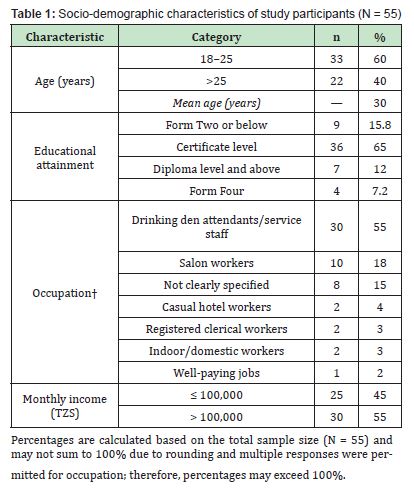
A total of 55 women participated in the study, with a mean age of 30 years. The majority (60%) were aged between 18 and 25 years. Educational attainment was generally low, with most respondents having certificate-level education (65%), while only 7.2% had completed Form Four. More than half of the participants (55%) were employed in drinking dens, primarily as attendants or service staff. Nearly half (45%) reported a monthly income of TZS 100,000 or below, reflecting low socioeconomic status. Several respondents reported engaging in multiple income-generating activities Table 1.
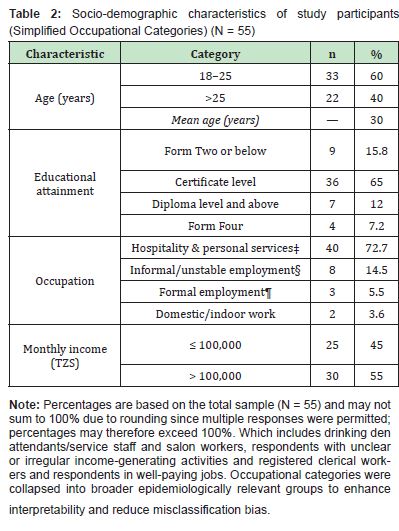
Below is a simplified, epidemiologically clear occupation classification. The categories are collapsed into meaningful exposure- and socio-economic status (SES)-relevant groups commonly used in public health research. For epidemiological clarity, occupations were grouped four main categories which includes hospitality & personal services (high public contact, informal sector), informal/unstable employment (economic insecurity), formal employment (stable income, regulated work) and domestic/indoor work (limited public exposure) in order to reduces misclassification, improves interpretability, and strengthens associations with socioeconomic and health outcomes and shown in Table 2 below.
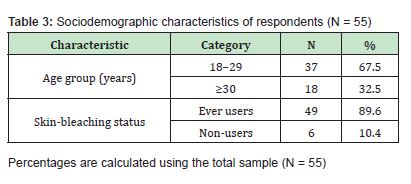
The prevalence of skin-bleaching practices among the respondents was 89.6%. Among users, 71.4 % reported current use, while 12.5% had used skin-bleaching products in the past. Skin bleaching was more common among women aged 18–29 years (67.5%) compared to older age groups.
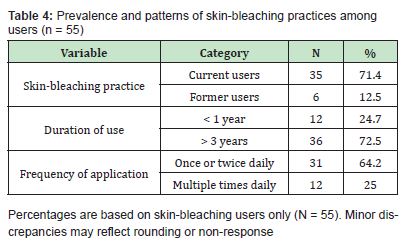
Patterns of skin-bleaching practices Duration and frequency of useRegarding duration of use, 24.7 % of participants reported using skin-bleaching products for less than one year, while 72.5% had used them for more than three years. Frequent application was common, with 64.2% applying the products once or twice daily, and 25% reporting multiple daily applications.
Body areas applied
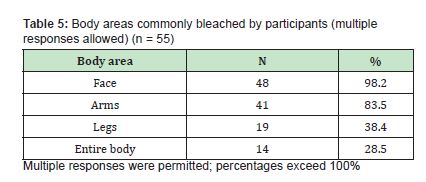
The most commonly bleached body areas were the face (98.2%), followed by the arms (83.5%), legs (38.4%), and entire body (28.5%). That is 98.2% of the 40 prefer doing facial alone, 38.4% do both face, arms and legs, while 28.5% does entire body due to the expensive nature of the cosmetics
Types of skin-bleaching products used
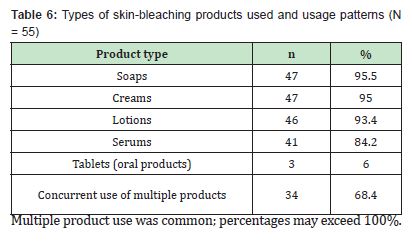
Participants reported using a variety of skin-bleaching products, including creams (95%), lotions (93.4%), soaps (95.5%), and serums (84.2%). A substantial proportion (68.4 %) reported using multiple products concurrently and 6% uses tablets
Sources and motivations for skin-bleaching
Sources of cosmetic productsIt is complicated, 97.3% do get Skin-bleaching products from beauty salons (97.3%), local markets (35.4%), and (88.6%) of the 40 do purchase from informal street vendor since they are the main source of supplies even to the saloons, while only 23.1% reported purchasing products from licensed cosmetic shops or pharmacies.
Motivations for skin-bleaching
The primary motivations for skin bleaching included desire for lighter skin tone and perceived beauty enhancement (97%), social influence or peer pressure (38.5%), and media influence (48.7%).
Self-reported health effects associated with skin-bleaching
Dermatological symptoms
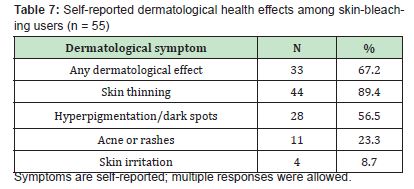
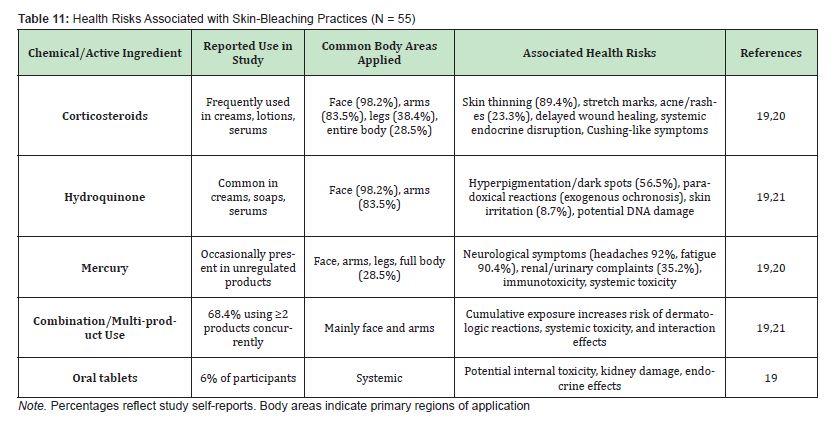
A high proportion of users (67.2%) reported experiencing skin-related adverse effects but are not aware since they are illiterate. Out of these skin irritation (8.7%), hyperpigmentation or dark spots (56.5%), skin thinning (89.4%), and acne or rashes (23.3%).
Systemic health symptoms
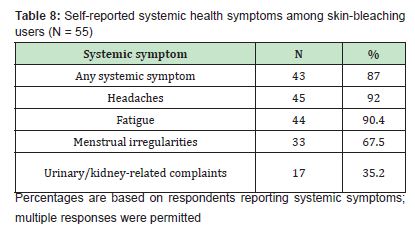
In addition to dermatological effects, 87% of respondents reported systemic symptoms, such as headaches (92%), fatigue (90.4%), menstrual irregularities (67.5%), and urinary or kidney-related complaints (35.2%).
Summary of key findings
Overall, the findings demonstrate a high prevalence of skin-bleaching practices among women in Zanzibar, characterized by frequent and prolonged use, widespread reliance on informal cosmetic sources, and a high burden of self-reported dermatological and systemic health effects Table 3-8.
Quantitative results of cosmetic samples
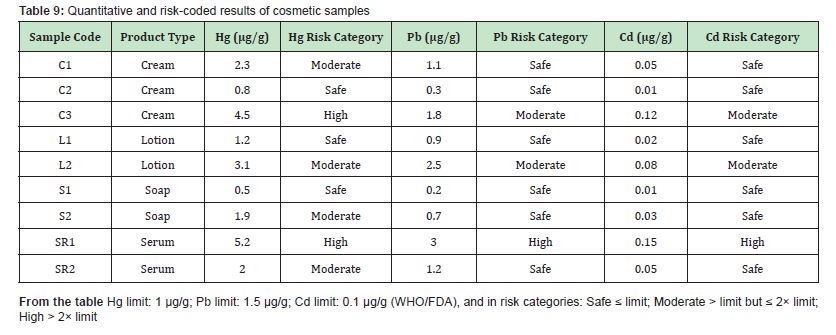
A total of 9 coded cosmetic products (creams, lotions, soaps, serums) were analyzed for mercury (Hg), lead (Pb), and cadmium (Cd) using ICP-OES. All products were anonymized to ensure manufacturer confidentiality and shown in Tables 9,10.
Donabedian-based assessment
This study applied the Donabedian structure process outcome framework in accordance with WHO public health surveillance principles and Zanzibar Food and Drug Development Authority (ZFDA) cosmetic safety and regulatory guidelines. A mixed-methods approach was used. The structure domain assessed healthcare access, market characteristics, and regulatory capacity. Quantitative data evaluated access gaps, while laboratory screening of cosmetic products identified prohibited or restricted substances as defined by ZFDA and WHO. Qualitative interviews explored regulatory and enforcement challenges. The process domain examined exposure pathways. Surveys quantified prevalence, frequency, and duration of cosmetic use, and toxicological analysis linked use patterns with ingredient concentrations to estimate exposure intensity. Social drivers of use were explored qualitatively. The outcome domain assessed adverse health effects, chemical-specific toxicity linkages based on WHO risk thresholds, and psychosocial impacts. Findings were triangulated across domains to inform regulatory risk assessment and policy action
Qualitative results based on label claim
Qualitative review of product labels used by participants revealed the presence of several ingredients of toxicological concern, including hydroquinone, Corticosteroids, Glutathione, diethanolamine, trichloroethylene, and formaldehyde, which are either restricted or prohibited in cosmetic formulations. From facial scrab products they include formaldehyde, dibutyl phthalate, p-phenylenediamine, hydroxyphenol, ammonium persulfate, and ultraviolet filters such as oxybenzone and octinoxate. These ingredients were recorded based on product labeling and participant report only. No laboratory chemical analyses were conducted to verify the label claims therefore, results represent qualitative, label-claimed information. The detection of these substances based on label claims raises significant public health concerns, particularly given the frequent and prolonged use reported by participants. These substances are subject to strict regulatory controls or bans due to their potential dermatological, endocrine, and systemic toxicity
This study documents a very high prevalence of skin-bleaching practices among young adults in Zanzibar, with nearly 90% of respondents reporting ever use. The predominance of users aged 18–29 years highlights the heightened vulnerability of young populations to sociocultural beauty norms and peer influence, consistent with evidence from Ghana, Nigeria, and Zimbabwe.3,15,16
From tables interpretation
A total of 55 women participated in the study, with a mean age of 30 years. Most participants (60%) were aged 18–25 years, suggesting that younger women are the primary users of skin-bleaching products in this community. Educational attainment was generally low: 65% had certificate-level education, 15.8% had completed Form Two or below, 12% had a diploma or higher, and only 7.2% had completed Form Four Table 1. This implies that majority have decimal knowledge on the side effects regards the application of these cosmetics. Occupationally, the majority (55%) were employed in drinking dens as attendants or service staff, followed by salon workers (18%). Monthly income was generally low, with 45% earning ≤ TZS 100,000, reflecting a socioeconomically vulnerable population. Several participants reported engaging in multiple income-generating activities. Collapsing occupations into broader epidemiologically relevant Table 2 categories demonstrated that the majority of participants were concentrated in informal, high public-contact sectors, particularly hospitality and personal services. This occupational distribution reflects underlying socioeconomic vulnerability and potential increased exposure to social and cosmetic-related risk factors. The simplified classification improved interpretability and minimized misclassification bias, thereby strengthening the analysis of associations between occupation, socioeconomic status, and health outcomes in the study population.
Skin-bleaching was highly prevalent, reported by 89.6% of participants. Among these, 71.4% were current users, while 12.5% had used products in the past. Younger women (18–29 years) reported higher usage (67.5%) than older age groups, highlighting a generational trend in skin-lightening practices as shown in table 3. Long-term exposure was common, with 72.5% of users reporting use for more than three years. Frequent application was prevalent: 64.2% applied products once or twice daily, and 25% applied multiple times per day. The face was the most commonly targeted area (98.2%), followed by arms (83.5%), legs (38.4%), and entire body (28.5%). Application was concentrated on the face and arms, areas with high cosmetic visibility and increased potential for percutaneous absorption. This pattern reflects strong societal pressure to attain lighter skin tones associated with perceived beauty and social advantage, reinforcing findings from other sub-Saharan African settings.3,16 Thus, we can conclude by saying that facial use predominated due to cultural emphasis on facial appearance and the cost of full-body products table 3 and table 4. These process-level behaviors demonstrate how social norms interact with weak regulatory enforcement to perpetuate harmful cosmetic practices.
Participants used creams (95%), lotions (93.4%), soaps (95.5%), serums (84.2%), and tablets (6%). Multiple product use was common (68.4%), increasing potential cumulative exposure to toxic chemicals such as hydroquinone and corticosteroids table 6 and table 7. Skin-bleaching products were primarily obtained from beauty salons (97.3%) and informal street vendors (88.6% of users), with fewer purchases from licensed shops or pharmacies (23.1%). The supply chain is largely informal, increasing the risk of unsafe products. Motivations included desire for lighter skin and perceived beauty enhancement (97%), social influence or peer pressure (38.5%), and media exposure (48.7%). These findings underscore the social and cultural drivers of skin-lightening behaviors. A majority of users (67.2%) reported skin-related adverse effects, including skin thinning (89.4%), hyperpigmentation (56.5%), acne or rashes (23.3%), and irritation (8.7%) as shown in Table 7. Limited literacy may reduce awareness and timely health-seeking. Systemic complaints were reported by 87% of users, including headaches (92%), fatigue (90.4%), menstrual irregularities (67.5%), and urinary or kidney-related issues (35.2%) as shown in table 8. These symptoms align with known toxicities of prolonged exposure to chemical bleaching agents.
Interpretation (Public‑Health Advocacy)
The quantitative analysis of heavy metals using the ICP-OES in anonymized cosmetic samples revealed that a substantial proportion of products contained concentrations of mercury (Hg), lead (Pb), and cadmium (Cd) above internationally recognized safety thresholds. For example, Hg levels in several samples fell into moderate to high-risk categories, with some exceeding the 1 µg/g guideline recommended for cosmetic products, while Pb and Cd also frequently surpassed their respective permissible limits. Such exceedances were observed in 66.7 % of samples for Hg and 33.3 % for both Pb and Cd, indicating widespread deviation from acceptable impurity levels Table 7 and Table 8. A qualitative review of cosmetic product labels reported by participants identified multiple substances of toxicological concern that are prohibited, restricted, or not authorized for cosmetic use under the EU Cosmetics Regulation (EC) No 1223/2009,17 and are recognized by the World Health Organization (WHO) as posing potential public-health risks. These included hydroquinone, topical corticosteroids, glutathione, diethanolamine (DEA), trichloroethylene, and formaldehyde or formaldehyde-releasing agents. Under EU regulation, hydroquinone and corticosteroids are prohibited in cosmetic products due to their association with exogenous ochronosis, skin atrophy, endocrine disruption, and systemic toxicity, while formaldehyde and trichloroethylene are classified as carcinogenic and sensitizing substances, warranting strict prohibition.18 Similarly cautions against prolonged dermal exposure to these compounds because of their links to dermatological damage, nephrotoxicity, neurotoxicity, and increased cancer risk. The table below show Health risks summarize reported symptoms and documented effects from regulatory and scientific sources Table 11, Table 12.
Additional health risks related to skin-bleaching practices
Beyond dermatological and systemic symptoms, chronic exposure to chemicals commonly found in skin-bleaching products, such as mercury, corticosteroids, and hydroquinone, may pose serious reproductive, neurological, and developmental risks.22 Mercury, for example, is a potent neurotoxin that can cross the placenta, potentially affecting fetal brain development and leading to cognitive impairments in children.23,24 In adults, chronic mercury exposure has been linked to kidney damage, immune system disruption, and neurological symptoms such as headaches, tremors, and fatigue.20,25
Corticosteroids present in some unregulated skin-lightening creams can disrupt hormonal balance, potentially contributing to menstrual irregularities, infertility and endocrine dysfunction,26,27 while hydroquinone may act as a weak endocrine disruptor and has demonstrated DNA-damaging potential in experimental studies.21,28 These exposures may also affect fertility, with evidence suggesting possible reductions in reproductive function after prolonged use.28 Although direct causal links between skin-lightening products and severe outcomes such as sterility or congenital malformations in humans remain under-studied, the biological plausibility and observed systemic symptoms in this study’s participants underscore the potential for serious adverse health effects.
Given that a majority of study participants used these products frequently, over long durations, and on large body areas, the cumulative risk of systemic, reproductive, and developmental harm is likely elevated. These findings highlight the urgent need for regulatory enforcement, public health education, and culturally sensitive interventions to reduce exposure and protect women’s health.
Further examination of facial scrub and exfoliating products revealed the presence of dibutyl phthalate (DBP), p-phenylenediamine (PPD), hydroxyphenol, ammonium persulfate, and ultraviolet (UV) filters such as oxybenzone (benzophenone-3) and octinoxate (ethylhexyl methoxycinnamate). These substances are subject to regulatory scrutiny due to their sensitizing, endocrine-disrupting, or systemic toxicity profiles, with DBP prohibited in cosmetics in the EU and PPD tightly restricted because of its strong allergenic potential. UV filters such as oxybenzone and octinoxate are additionally recognized for their environmental persistence and ecotoxicity, particularly their contribution to coral reef bleaching and aquatic endocrine disruption, raising concerns beyond direct human exposure.29 The identification of these ingredients on product labels suggests regulatory non-compliance and inadequate consumer protection, particularly in low-regulation markets, and underscores the need for strengthened surveillance, enforcement, and public awareness in line with WHO and EU safety frameworks.
More than 70% of participants were current users, with most reporting product use extending beyond three years and frequent daily or multiple daily applications, a pattern that substantially increases cumulative toxicological exposure. The widespread concurrent use of multiple product types including soaps, creams, lotions, and serums indicates intentional product layering, a practice associated with amplified adverse effects, particularly when formulations contain potent corticosteroids, mercury, or hydroquinone.12,30 From a public health perspective, prolonged or repeated dermal exposure to such skin-lightening agents is linked to significant dermatological injury, systemic toxicity, endocrine disruption, and potential carcinogenic risk, findings that are consistent with the high prevalence of skin thinning and hyperpigmentation observed in this study and the documented adverse effects of long-term topical corticosteroid use.12,311 Of greater concern is the high prevalence of systemic symptoms, including headaches, fatigue, menstrual irregularities, and kidney-related complaints. Although these outcomes are self-reported and cannot establish causality, their consistency with documented toxicological effects of mercury and corticosteroids supports biological plausibility.30 The presence of formaldehyde, diethanolamine, and trichloroethylene, all of which are widely recognized as hazardous industrial or preservative-related chemicals, is of particular concern given their classification as sensitizers, probable or known carcinogens, and respiratory or neurotoxic agents. Their identification on product labels therefore indicates a level of exposure inconsistent with consumer safety objectives articulated by ZFDA and aligned with WHO precautionary principles.
Environmental concerns
In parallel, the use and disposal of cosmetics containing such compounds have implications for environmental protection, falling within the oversight mandate of the Zanzibar Environmental Management Authority (ZEMA). Persistent and bioactive substances such as formaldehyde, phthalate-related compounds, and certain solvent residues may enter wastewater systems and coastal environments, contributing to aquatic toxicity and ecological disturbance.32 In a small-island setting such as Zanzibar, where domestic effluents directly interface with sensitive marine and coastal ecosystems, the circulation of non-compliant cosmetic products represents not only a consumer-health issue but also an environmental risk. These findings underscore the need for strengthened inter-agency coordination between ZFDA and ZEMA, enhanced post-marketing surveillance, and targeted public awareness initiatives to reduce exposure to hazardous cosmetic ingredients, particularly among populations engaging in frequent or prolonged use of skin-altering products.
Donabedian Framework interpretation
The integrated findings in Table 11 below indicate that toxic cosmetic exposure in the study setting is driven by systemic regulatory and public health weaknesses, rather than individual behavior alone. Within the Donabedian framework, structural gaps including limited access to dermatological care and inadequate market surveillance enable the circulation of cosmetics containing prohibited substances under ZFDA regulations. These weaknesses sustain harmful use processes, where high prevalence and intensity of exposure are reinforced by strong social pressures. At the outcome level, the concordance between reported health effects and established toxicity linkages confirms a credible public health risk, while psychosocial harm reflects broader societal impacts. Consistent with ZFDA policy objectives, these findings underscore the need for strengthened regulatory enforcement, routine product screening, and targeted public health education to mitigate cosmetic-related health risks.
These findings highlight structural vulnerabilities within cosmetic regulation and surveillance systems, particularly in settings where informal markets and imported products dominate consumer access. Limited post-market testing, insufficient border control screening, and low consumer awareness collectively contribute to an environment in which potentially unsafe products may circulate widely. Addressing these gaps should be viewed as a public-health priority rather than a commercial or legal issue
Public‑health implications
Toxicological and health implications
The detection of elevated levels of heavy metals including mercury, lead, and cadmium in cosmetic products used by study participants has significant toxicological implications. Heavy metals are known to exert multisystem toxic effects, particularly following chronic exposure. Mercury is a potent neurotoxin and nephrotoxin that accumulates in body tissues, while lead exposure is associated with hematological impairment, renal dysfunction, and neurological disorders. Cadmium exposure has been linked to kidney damage, bone demineralization, and carcinogenicity. Importantly, chronic low-level dermal exposure, even at concentrations close to regulatory limits, can contribute to cumulative toxic burden when products are used daily over extended periods.33
In this study, approximately two-thirds of cosmetic samples exceeded safe mercury thresholds, and one-third exceeded recommended limits for lead and cadmium. Given that skin-bleaching practices often involve frequent application over large body surface areas, these findings raise concern for chronic systemic exposure. The risk is particularly pronounced among women of reproductive age, as toxic metals can cross the placental barrier and adversely affect fetal development, increasing the likelihood of neurodevelopmental deficits and other adverse pregnancy outcomes.
Regulatory and governance implications
Globally, regulatory agencies recognize the hazards posed by heavy metals in cosmetics and have established maximum permissible impurity limits to protect consumer health. For example, the U.S. Food and Drug Administration (FDA) restricts mercury to ≤1 µg/g in most cosmetic products and recommends a maximum of 10 ppm for lead as an impurity in externally applied cosmetics. Similar regulatory principles underpin cosmetic safety frameworks across many jurisdictions.
Within the Zanzibar context, cosmetic regulation falls under the mandate of the Zanzibar Food and Drug Agency (ZFDA), which oversees product registration, import control, and post-marketing surveillance. The identification of hydroquinone, topical corticosteroids, glutathione, diethanolamine (DEA), trichloroethylene, formaldehyde, and elevated heavy metals—substances that are internationally classified as prohibited, restricted, or unsuitable for cosmetic use—suggests potential gaps in market authorization, border control, and enforcement mechanisms. These findings point to weaknesses in regulatory surveillance that may allow unsafe products to circulate within informal and semi-regulated markets.
Public health practice and policy implications
From a public health perspective, the findings underscore the urgent need for strengthened cosmetic safety surveillance and preventive strategies. Routine laboratory monitoring of cosmetic products using validated analytical techniques such as inductively coupled plasma optical emission spectroscopy (ICP-OES) and even high-performance liquid chromatography (HPLC) for organic chemicals should be integrated into national quality assurance and post-marketing surveillance systems. Enhanced laboratory capacity would enable early detection of non-compliant products and reduce population-level exposure to toxic substances.
In addition, targeted consumer education initiatives are essential to raise awareness about the potential health risks associated with unregulated skin-bleaching products, promote informed purchasing decisions, and discourage harmful cosmetic practices. This age set is very vital to national development and has to be protected at all costs. Policy interventions should prioritize evidence-based risk assessment, inter-agency collaboration, and enforcement of existing regulations, particularly in informal market settings. By focusing on prevention, transparency, and consumer protection—rather than attributing liability to individual manufacturers-stakeholders can work collectively to reduce toxic exposures and safeguard vulnerable populations.34-37
In conclusion, this study contributes evidence that supports immediate public-health action aimed at reducing avoidable chemical exposure through cosmetic use. The findings advocate for strengthened regulatory surveillance, expanded laboratory capacity, targeted health education, and policy reforms that prioritize consumer safety. The present study demonstrates that a significant proportion of cosmetic products commonly used by women in Zanzibar contain measurable concentrations of heavy metals mercury, lead, and cadmium exceeding internationally recognized safety limits. These findings highlight a potential public-health risk from chronic exposure, particularly through frequent dermal application associated with skin-bleaching practices. Although the study does not implicate individual manufacturers, the results underscore systemic gaps in product surveillance and regulatory enforcement. Prioritizing cosmetic safety as a public-health issue offers a practical pathway to prevent chemical-related health risks and protect the well-being of women in Zanzibar and similar settings. Proactive regulatory action, combined with community education and evidence-based policy, is essential to mitigate avoidable toxic exposures and promote safer consumer environments. Since cosmetic use is intentional, frequent and long-term, particularly with skin-bleaching practices, repeated dermal application increases the likelihood of cumulative absorption, especially for substances known to bioaccumulate or interfere with endocrine and renal function. While the study does not attribute responsibility to individual manufacturers or products, the presence of measurable levels of potentially harmful substances underscores a broader population-level risk that warrants urgent public-health attention. The concentrations observed in this study, when interpreted against international safety benchmarks, suggest that regular users may experience exposure levels of potential toxicological relevance Equally critical is the role of health education and community engagement. Integrating cosmetic safety into maternal health services, community health outreach, and media campaigns may be especially impactful given the demographic profile of users identified in this study.
Policy recommendations (ZFDA and Ministry of Health)
Based on the integrated Donabedian analysis, the following actions are recommended to strengthen cosmetic safety and public health protection in Zanzibar:
Strengthen market surveillance and enforcement
ZFDA should intensify routine inspection, sampling, and laboratory screening of cosmetic products, with particular focus on informal and cross-border markets, to detect using ICP-OES and HPLC to ensure compliance with international safety limits and remove products containing prohibited or restricted substances.
Enhance regulatory compliance and product registration
Mandatory cosmetic product registration and post-market surveillance should be reinforced, including traceability requirements and sanctions for non-compliance, in line with ZFDA regulations and WHO cosmetic safety guidance.
Expand public health education and risk communication
ZFDA, in collaboration with the Ministry of Health, should implement targeted risk communication campaigns to raise awareness of cosmetic-related health risks associated with skin-bleaching practices and heavy metal exposure and promote safer alternatives.
Improve access to dermatological and adverse event reporting services
Integration of cosmetic-related adverse event reporting into existing health systems should be strengthened to support early detection and regulatory response.
Regulatory reinforcement to implement guidelines, monitor imports, and control post-market distribution in connection with Ministry of Health.
Further research including longitudinal studies and biomonitoring to assess exposure levels in users and potential health outcomes.
Conceptualization, data curation, formal analysis, investigation, methodology, visualization, writing of original draft, review & editing.
The authors express their gratitude toward Ali Yussuf of Zanzibar Foods and Drug Authority for his motivating ideas while conducting the research and moral support particularly Mr. Charlse Buteka of African Minerals and Geoscience Center for ICP-OES. Finally, many thanks go to Zanzibar University for their innumerable innuendos and moral warm heartily support without which we would not have accomplish this work.
The author declare that no financial support was received for the research, authorship, and/or publication of this article.
The author declares no commercial or financial relationships that could be construed as a potential conflict of interest.
- 1. Lewis KM, Robkin N, Gaska K, et al. Investigating motivations for women’s skin bleaching in Tanzania. Psychology of Women Quarterly. 2011;35(1):29-37.
- 2. Dlova NC, Hamed SH, Tsoka Gwegweni J, et al. Skin-lightening practices among women of African and Indian ancestries in Durban, South Africa. British Journal of Dermatology. 2015;172(6):1642-1646.
- 3. Bilewu OO, Raimi MO, Adegboyegba O, et al. Skin lightening among young adults in Ilorin West, Nigeria: Health risks, societal pressures, and the pursuit of fairness. Global Journal of Environmental Science and Sustainability. 2025;2(1).
- 4. Arora N, Amin S. Analyzing Global Interest in Skin Whitening by Geographic Region. Proc (Bayl Univ Med Cent). 2024;37(3):505-507.
- 5. Mohamed AF, Arbab IA. Awareness and prevalence of skin bleaching among female university students in Garowe City, Somalia. British Journal of Healthcare and Medical Research. 2025;12(4):330-341.
- 6. Hamann CR, Boonchai W, Wen L, et al. Spectrometric analysis of mercury content in 549 skin-lightening products: is mercury toxicity a hidden global health hazard?. J Am Acad Dermatol. 2014;70(2):281-7.e3.
- 7. Bamidele OD, Omotola OA, Adewuyi GO. Quality assessment of hydroquinone, mercury and arsenic in skin-lightening products. Journal of Cosmetic Science. 2023;74(2):95-108.
- 8. Bastiansz A, Ewald J, Rodríguez Saldaña V, et al. Systematic review of mercury exposures from skin-lightening products. Environmental Health Perspectives. 2022;130(11):116002.
- 9. Al Saleh I, Al Doush I, Shinwari N, et al. Mercury exposure in skin-lightening creams and its impact on health. International Journal of Toxicology. 2003;22(4):291-299.
- 10. Qin AB, Liu L, Gao BX, et al. A case of chronic mercury poisoning associated nephrotic syndrome, abdominal pain, and neuropsychiatric symptoms. Ren Fail. 2023;45(2):2261553.
- 11. Lazar M, De La Garza H, Vashi NA. Exogenous Ochronosis: Characterizing a Rare Disorder in Skin of Color. J Clin Med. 2023;12(13):4341.
- 12. Gabros S, Nessel TA, Zito PM. Topical corticosteroids. In StatPearls. StatPearls Publishing. 2025.
- 13. Skoog DA, Holler FJ, Crouch SR. Principles of instrumental analysis 6th (edn.) Cengage Learning. 2014.
- 14. World Health Organization. Preventing disease through healthy environments: Exposure to chemicals. WHO Press. 2019a.
- 15. Nyoni Kachambwa P, Naravage W, James NF, et al. A preliminary study of skin bleaching and factors associated with skin bleaching among women living in Zimbabwe. Afr Health Sci. 2021;21(1):132-139.
- 16. Asumah MN, Abubakari A, Dzantor EK, et al. Prevalence of skin bleaching and its associated factors among young adults in Ghana. Public Health and Toxicology. 2022;2(1):6.
- 17. European Commission. Regulation (EC) No 1223/2009 of the European Parliament and of the Council on cosmetic products. 2009.
- 18. World Health Organization. Evaluation of certain chemicals in consumer products. WHO Press. 2011.
- 19. World Health Organization Regional Office for Africa. Skin bleaching in Africa: Regional fact sheet. 2023.
- 20. Food and Drug Administration. Skin product safety: What you need to know about skin-lightening products. 2022.
- 21. Mahé A, Ly F, Lammint P. Skin bleaching among women in Africa: Prevalence, motivations, and health consequences. Journal of the American Academy of Dermatology. 2003;48(2):252-259.
- 22. Altraide D, Aladeh DA, Odibi BO. Skin bleaching practices: Products, mechanisms and effects. Asian Journal of Research in Dermatological Science. 2021;4(1):34-42.
- 23. Sarzo B. Prenatal mercury exposure and neurobehavioral outcomes from childhood to pre-adolescence. Environmental Research. 2024;252(Pt.2):118954.
- 24. Appiah F. Developmental risks of mercury exposure during pregnancy. Genesis Journal of Gynaecology and Obstetrics. 2025;1(1):1-5.
- 25. Gogia N, Kumar P. Mercury poisoning: Effects on the central nervous system. In P. Kumar & N. Gogia (Eds.), Heavy metal toxicity and neurodegeneration. Academic Press. 2025:pp.55-76.
- 26. Health Sector Foundation Kenya. Skin bleaching and infertility. 2024.
- 27. Hussein F, Can A, Eltayieb L, et al. Skin lightening cream causing hypoadrenalism. Endocrine Abstracts. 2025;110:EP95.
- 28. Jurica K, Karačonji IB, Benković V, et al. In vitro assessment of the cytotoxic, DNA damaging, and cytogenetic effects of hydroquinone in human peripheral blood lymphocytes. Arh Hig Rada Toksikol. 2017;68(4):322-335.
- 29. Rücker J, Leonhardt J, Wild C. Effects of three sunscreens on the ecophysiology of hard and soft corals from the Maldives. Marine Pollution Bulletin. 2025;219:118316.
- 30. World Health Organization. Preventing disease through healthy environments: Mercury in skin-lightening products. WHO Press. 2019b.
- 31. Scientific Committee on Consumer Safety (SCCS/1559/15). Opinions on hydroquinone, benzophenone-3, p-phenylenediamine, and formaldehyde. European Commission. 2015.
- 32. Tuan Tran H, Lin C, Bui XT, et al. Phthalates in the environment: characteristics, fate and transport, and advanced wastewater treatment technologies. Bioresour Technol. 2022;344(Pt B):126249.
- 33. Cheng YF, Zhao YJ, Chen C, et al. Heavy Metals Toxicity: Mechanism, Health Effects, and Therapeutic Interventions. MedComm (2020). 2025;6(9):e70241.
- 34. Bose O’Reilly S, McCarty KM, Steckling N, et al. Mercury exposure and health effects in humans: A review. Environmental Health. 2010;9:1
- 35. Kaundal R, Jindal R, Kaur I. Adverse effects of skin-lightening creams and cosmetics. International Journal of Research in Dermatology. 2018;4(3):342-348.
- 36. Rahman MM. Toxic effects of lead, mercury, and cadmium on human health: A systematic review. Applied Sciences. 2024;15(24):12883.
- 37. Sagoe D, Pallesen S, Dlova NC, et al. The global prevalence and correlates of skin bleaching: a meta-analysis and meta-regression analysis. Int J Dermatol. 2019;58(1):24-44.
