

Falls among community dwelling older adults produce many adverse health outcomes. Among the multiple potentially remediable falls risk factors is the presence of various anxiety states and symptoms. This review explores the possible link between excess anxiety and the risk for falling in the context of the home, and whether reducing anxiety in particular will limit future falls and fracture events. Drawn largely from the English language peer reviewed works posted on PUBMED between January 1, 2015-and January 31, 2026, articles that focused on the topic of anxiety among older adults residing in community settings were sought and examined. Although limited in quantity, data reveal a sizable proportion of older adults continue to incur injurious falls at substantive rates and with increasingly serious impacts in the home setting. Those adults experiencing any form of anxiety are likely to be at higher risk for falling once or multiple times than non-anxious older adults and should be duly screened and treated accordingly to avert the emergence of independence negating excess disabling ramifications.
Keywords: Aging, Anxiety, Home-isolation, Injuries, Older adults, Prevention
Falls and falls injuries, which represent an event resulting in the individual coming to rest on the ground or floor or other lower-level surfaces inadvertently or unexpectedly with or without tissue damage continue to prevail at high rates among community-dwelling adults 55 years of age or older.1 Commonly, producing marked long term progressive deficits in life quality among many, as well as tremendous financial and social costs,2,3 the health of seniors who fall may be expected to decline and spiral downwards if action to prevent this is not forthcoming or suboptimal. In addition to fostering greater morbidity and premature mortality risks among older adults when compared to age-matched non fallers, falls may in fact prove deadly3 or lead to decreased social contacts in their own right, long-term physical disability, severe dependency and eventual hospitalizations,2 with or without life threatening fractures.4
As reported by White5 while physical factors can undoubtedly heighten falls risk and falls consequences, there are also important psychological consequences of falls incurred by older adults, even those who were previously healthy. These include the onset of depression, anxiety when walking or weight bearing, as well as generalized anxiety, activity related restrictions, and fear of falling,3 which alone can lead to functional declines, distress, sleep deprivation, and a reduced life quality,4,6 regardless of their ability to function independently.
As well, possible weakness, and frailty increases due to isolation effects, poor nutrition, reduced overall support, excess bone and muscle mass losses, declining balance and coordination abilities, pain, and increased disability, could arguably be expected to further exacerbate rates of injurious falls incurred in the homes of isolated high age older adults post falls injuries.7
Unsurprisingly, as observed by Chiba8 despite a decline in most trauma related injuries during the recent COVID-19 pandemic that began in December 2019, a notable 32% increase in the degree of ground level falls among the elderly group in particular was recorded in their trauma unit. Another 2021 report likewise showed an increase in home injuries over the pandemic period, and that falls remained the dominant mechanism of injury in 2020 in the home, while contributing 39.9% of all hospitalizations.9
Ruiz Medina10 too reported falls rates to have experienced a significant increase during the lockdown period – a situation that today might parallel that of a high-risk older adult living in isolation in the community or experiencing loneliness. Moreover, although a role for anxiety was not evident in accounting for the increased falls severity observed by Ruiz Medina10 psychological factors are found to predict recurrent falls.
Indeed, it appears falls are a risk factor for fostering a state of reactive anxiety, as has been observed independently of the context of a fall.11-14 In addition, cumulative data imply even a single apparently non-injurious fall can yet lead to long-lasting physical impairments as well as emergent or increasingly complex cognitive reactions such as anxiety and with related multiple rehabilitation implications. Trauma cases for example tend to report a lower health-related quality of life and increased needs for healthcare and social support.14
In this regard, one group who recently developed a model involving two main components as applied to the complexities of post-traumatic stress disorder - fear and dysphoria – is one hypothesized to be directly associated with fears of falling that commonly ensues after a fall injury or event.15 Another proposes the ability to integrate memories of falls in the older adult population is likely associated with anxiety and depression as is found in many fallers and often to a higher degree in recurrent fallers. As well, anxiety may contribute to a fall if its presence results in avoidance of processing of the meaning of falls, and depression that may hamper the ability to extract meaning from the event, and integrating falls and their possible prevention into their life story.16
Another idea is that the 'two-system' view of fear that builds on the traditional conceptualizations of emotion can possibly be applied to explain the mechanisms responsible for behavioral and physiological responses to threats such as fall and in this view may be distinct from those underpinning the (conscious) emotional experience itself. The researchers empirically tested this notion within a novel, applied context of social and economic importance and fear of falling in older adults. In addition to social and adverse economic outcomes, fears of falling commonly observed after a fall was more marked in the event of the emergence or presence of depression, anxiety, osteoarthritis, and increased stress18 and those with adverse mental state scores exhibited worse post fall physical function ability outcomes than not.17,18
Worse outcomes after a fall may also reflect the absence of significant others or limited support presence, Bu19 who aimed to investigate the longitudinal association between loneliness, social isolation and falls amongst older adults that required hospital admissions found there was a 5% increase in the hazard of self-reported falls relative to a one point increase in those expressing loneliness feelings independent of socio-demographic factors. Both living alone and low social contact were associated with a greater hazard for self-reported falls even after controlling for socio-demographic factors, health and life-style differences and this interaction is likely to be further impaired in the face of any fall’s fears or anxiety impacts. Unsurprisingly, similar results were found for hospital admissions following a fall that appeared related to both isolation and lack of social contacts, as well as instrumental resources.20
Anxious older adults living alone may also be at risk for other falls risk factors cited such as: inadequate anticipation and coordination processes in the face of environment hazards, for example tripping on a loose carpet due to dizziness, or dual tasks such as walking and carrying or using an assistive device. The effects of anti-anxiety drugs on cognitions, mobility, and functional disability may play a further role, as may emergent depression and physical inactivity.
In short, among the many factors that may mediate poor health, as well as heightened future falls and fracture risk among older adults are an array of psychological conditions, such as anxiety, and fear of falling which may occur in different forms, in response to an unexpected fall or repeated falls experiences that evoke multiple fearful thoughts concerning the possible exposure of future falls events and serious injuries, especially among the frail. This situation can conceivably predispose the older community located house bound adult not only to a heightened falls risk, regardless of physical abilities, but to further frailty, sleep challenges, and health status declines. As well, in terms of mental ill-health, anxiety, which can occur as an independent health condition or one that may well be considerably elevated in older adults in response to a fall or a belief in their inability to function safely, control their balance, and avert one or more falls.21-26
In light of the aforementioned outline, and the concurrent observation that psychological symptoms such as anxiety, a very common psychological syndrome occurring in the older adult population either as either a generalized or specific chronic condition, as well as in response to a variety of stressful negatively perceived situations is a falls determinant, this review strove to specifically examine what has been reported as regards the role of anxiety in falls-related risk among older community dwelling adults who may be confined and isolated for protracted periods or fear socializing post falling. Since excess fear can determine health status and indirectly falls risk as well as fracture risk this analysis specifically aimed to examine if more needs to be done to offset both primary as well as secondary falls risk and by analogy bone fractures and further isolating and costly movement restrictions.
Based on what is known, it was hypothesized that anxiety, in its various forms, and that may prevail as a reactive response in the light of a fall’s incident is important to mitigate and treat in this regard.
It was believed falls fears are potentially common determinants of recurrent falls and injuries such as fractures and that anxiety and fear if identified can help avert many falls.
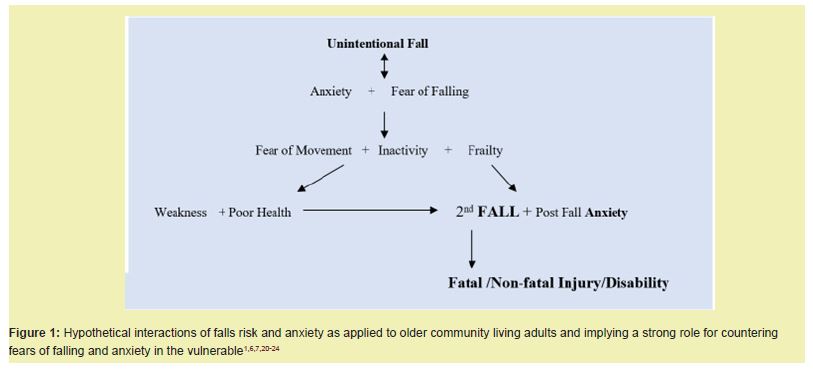
It was also believed that by failing to do this basic falls fears among the elderly, as well as excess fears of falling even in response to non-injurious home falls may provoke further anxiety, as well as an excess degree of debility, weakness, frailty, possible bone and muscle mass losses, and ultimately possible fatal health implications as outlined in Figure 1.
An extensive internet, plus PUBMED, Pubmed Central, GOOGLE SCHOLAR, and SCIENCE DIRECT data base search was carried out over several days in order to locate recent articles or information sources detailing or examining falls risk and features of anxiety among older adults living in the community as published between January 1, 2015-January 31. 2026. These databases were specifically selected owing to their being among the world’s largest medical peer reviewed data sources and repositories and that are deemed reliable and representative of the documents reporting the issue at hand. The focus of the search was on falls among older adults, specifically those living independently in the community relative susceptible to recurrent falls and bone fracture. The key words applied were: anxiety, falls, prevention, and older adults. All forms of relevant documentation were deemed acceptable, and after carefully scanning the most salient documents, the most informative articles especially those cited by others were downloaded and reviewed in more detail. After a final search was conducted, the information of interest was extracted and relayed in narrative form to include general background information, specific topical information, and the implications thereof. Nursing home studies, studies on younger or middle-aged adults, studies on specific health conditions, and studies published before 2015 were largely excluded.
Although falls are common among older adults, the population growing most rapidly globally, very few current publications were found to address this topic specifically, especially from an anxiety perspective. However, even though Williams27 noted no significant association between anxiety disorders and falls among prior fallers who were depressed in their study, as observed in a systematic review by Payette28 and Almeida18 who studied 41,098 community dwelling men and women, mean ages 70.0 ± 8.9 years, a falls prevalence of 8.2% that was noted was higher among those who were older, female, and frail, those exhibiting evidence of multiple medication usage and/or fear of falling. Also observed was that those who sustained a fall and developed falls related psychological concerns were more likely to fall repeatedly than those who did not take multiple medications or have any falls associated fears.22 Indeed, the main factors directly associated with falls were anxiety, visual impairment, numbers of medications, and environmental risks, while being married and able to walk rapifly were inversely associated with falls risk. As regards recurrent falls, anticonvulsant use and increased depressive symptoms were directly associated with these potentially harmful incidents. At least six out of ten older previous fallers expressed fears of falling again, especially those who reported difficulties in climbing stairs, sleep problems, sedentary behaviors, hypothyroidism, hypertension and balance and gait abnormalities.
Although the causal and debilitating pathways underpinning the interactions of anxiety and falls related impacts is not clearly researched or understood, an earlier meta-analysis29 showed clinical anxiety and falls risk are indeed correlated with respect to falls in the home, common among community dwelling older adults,30 and can prove highly injurious, especially among older men. It was conjectured older men may have challenges if they lack social support and especially additional difficulties in evading obstacles or hazards in an optimal timely manner,31 as well as having higher anxiety values, fatigue, and sleep medication usage.32 Anxious older adults are also found to exhibit less proficient standing balance when situated on an elevated surface as well as more subnormal postural sway tests than non-anxious controls.33
Other data34 show that in addition to well-known falls risk factors such as walking speed deficits, dynamic balance, and functional mobility problems, anxiety, and depression are prevalent falls risk indicators among older women. In particular, this may denote poor sleep efficacy and the use of sleep medications that decrease gait speed, and functional mobility, which in turn foster depression, and the use of additional medication. Additionally, increased anxiety and depression symptoms tends to worsen dynamic balance and encourages more movement restraint than is desirable for averting falls and fractures35 and thereby a possible heightened and persistent fear of falling, a post-fall anxiety syndrome, concurrent depression and anxiety,24 and excess frailty.7
Ellmers36 who examined the relationship of anxiety and high-risk patterns of visual search in 44 older adults during adaptive locomotion among older adults deemed to be at a high risk of falling found a link between heightened fall-related anxiety and "high-risk" visual search behaviors found to be associated with greater stepping errors. As per Viaje37 who investigated the effect of a visiospatial dual-task on stepping performance in older people with and without concern about falling and the impact of repeating this task in those with high concern about falling concluded people with higher general falling concerns tended to experience more difficulties during a dual-task condition than those with lower concern levels. Of further interest was that ‘worse’ sensorimotor and cognitive functioning heightened this effect.
Another highly relevant cross-sectional, as well as longitudinal study conducted by Choi38 that examined whether worrying about falls restricts social engagement in older adults showed anxiety was significantly associated with both informal and formal social engagement restriction at time two, even when controlling for falls incidents and changes in health status and other covariates. The findings underscored the importance of reducing fall worry and preventing social disengagement in late life, as well as possibly during any ensuing period of imposed or prolonged home-based social isolation.
As observed by Zhao39 whereas falls in community-dwelling older adults are a complicated phenomenon attributed to a variety of socio demographic factors, health conditions, functional problems, and environmental factors, this group found that homebound or semi-homebound older adults were 50% more likely to experience a fall than non-homebound individuals. Impaired balance was the strongest falls predictor, followed by problems moving around in the home. Additional risk factors were arthritis, depression or anxiety.
Other reports imply that the negative impact of social isolation, confinement, and social distancing on mental and physical health of older adults, and their connection to falls vulnerability, as well as poor health cannot be underestimated.19,21 In addition, a possible accompanying lack of outdoor exposure and resultant vitamin D deficiency may likewise contribute to an increased falls and fall injury risk through its effect on muscle, and bone health, in its own right.40 Social isolation may also impact sleep quality, pain, and the ability to lead an active lifestyle in the presence of excess fear.41 At the same time, excess drug and/or medication usage as an outcome of the intersection of these converging factors may explain the increases of injurious medication/drug overdose visits observed over the pandemic period by Harmon42 as well as falls.43,44 Sitdhiraksa45 found approximately 35% of previous older fallers 80 years of age or above who were living alone to also report fear of falling, even if they had not fallen, and this finding was associated in part with anxiety, depression, and balance impairments. In their analysis Chen46 identified anxiety as a key community-based falls factor across all age groups, thus implying fears or anxiety may indeed have influenced their non efficacious exercise program attendance and participation as far as benefiting preventive future falls risk post an incident falls event. Despite the valiant researcher efforts, and evidence muscle strength was perceptively increased post exercise, program attendance alone did not appear to be sufficient to mitigate future fall injuries, perceived risk of falls, loneliness, depression, anxiety, self-rated health, or physical function.47
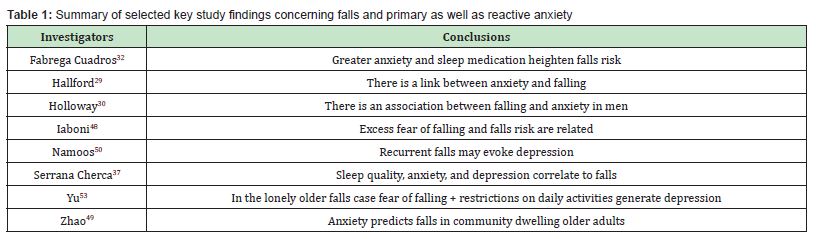
In essence, as per Table 1, the presence of trait anxiety, as well as the emergence of reactive anxiety states following a fall incident appears to produce or induce possible ongoing and cascading arrays of adverse influences on factors known to reduce wellbeing, mental and physical health, and to increase falls as well as injury vulnerability among older adults. Indeed, without timely, tailored, insightful and dedicated comprehensive efforts that can magnify postural control over time,59 it is likely persistent falls injuries, including more severe and/or extensive injuries such as bone fractures will emerge especially among those older adults who are frail and/or are living alone without support. In particular, unrecognized. suboptimally attended to or unaddressed falls deterministic factors may hasten the rate of older vulnerable adults experiencing more serious recurrent falls in those who are anxious and fearful as well as frail and depressed.6
This post fall state of apprehension where it occurs may be further compounded by added elements of anxiety evoked by fear-provoking media messages, cutbacks in services in times of fiscal restraint, persistent pain and declining function, and personal and family biases that mask mental health concerns. As such, and based on past research, it appears a multipronged set of key prevention or the following mitigation strategies enacted over a long-term period may be needed to avert secondary falls and fractures as follows:
- i. Adapted forms of exercise/obstacle avoidance interventions
- ii. Behavioral based interventions
- iii. Mindfulness meditation
- iv. Pain minimization
- v. Periodic screenings and assessments
- vi. Safe and accessible indoor and outdoor environments/transportation
- vii. TaiChi and Yoga
- viii. Social support
Other strategies that may warrant resource allocation include:
- i. Snow removal services as indicated
- ii. The assessment/possible reduction of psychotropic and opioid drugs
- iii. Efforts to maximize general health status
- iv. Tailored timely long-term interventions/referrals/therapy
- v. Vitamin D supplements for those who are vitamin D deficient or at risk for this
In addition a body of research supports non pharmacologic anxiety alleviating interventions such as:
- i. Building self-efficacy
- ii. Promoting positive affect
- iii. Sleep and home safety based education
- iv. Dietary and weight control strategies
- v. Face to face counseling
- vi. Involving family and caregivers
- vii. Requiring landlords to make necessary modifications to homes, where most older adults are likely to fall60
- viii. The enforcement of building standards, as indicated.1,51
Falls have been and continue to be a leading cause of death among older persons in the United States and elsewhere, affecting at least one in three or as many as one in two elderly adults over age 65 annually. A further 20-30 percent of survivors will suffer moderate to severe injuries sufficient to reduce mobility and independence and about two-thirds of fallers may suffer another fall within the next six months that requires hospital admission. In addition to enormous physical costs in terms of disability, if the faller survives, the direct economic costs of falling injuries are enormous.24
Unfortunately, current data reveal no abatement of this problem appears imminent, rather, an exacerbation of falls in the home and its surroundings as well as the rate of highly injurious incidents requiring hospitalization is strongly predicted in light of longevity increases as well as frailty in later life. In addition, many vulnerable adults may not receive immediate care if they cannot get up from the floor or the fall is located outside or in the home where communication opportunities are inaccessible or limited. Rehabilitation of the faller discharged to their home may however be marred even if timely in the presence of post fall fears of falling and anxiety that may persist for years after the original falls incident or event. Moreover, not only has anxiety in general been found to be a cause of falls in healthy older adults,29,30,51 but state anxiety in its various forms may be more marked post falling among those cases who are socially isolated, and especially when attempting to function in an upright position, which may be challenging and accompanied by maladaptive postural strategies.62 These alone can prove costly if they alter walking ability and generate persistent movement fears21,63 that reduce health status as well as confidence.64
In this regard, it is our contention that while some recurrent falls and injury events are inevitable, others are preventable. Yet, even in the face of falls induced anxiety that is widespread6 specific public health programs to address home falls prevention, before and especially after a fall that are advocated,7 may clearly not be tenable without specific external forms of parallel intervention designed to address any ensuing emotional health concerns without provoking fear, such as the introduction of social robots to quell loneliness,65 along with varied physical challenges that are likely unique as may be home based safety risk factors.
As well, we believe virtual interactions with providers designed to replace in person counseling may not prove universally efficacious,21 especially in the case of delivering cognitive behavioral therapy to relieve anxiety52 and where the client is suffering from pain, disability, and/or sleep deprivation and fatigue. In addition, without adequately tailored cognitive domain, instrumental and age-appropriate support, physical therapy interventions that aim to predominantly enhance the faller’s balance and strength capacity, alongside possible primary care inputs to foster bone health may similarly fail, for example if perturbation training that employs martial arts or backwards chain training is applied to help a frail elder overcome falling fears and build balance confidence. They may also fail if environmental issues underpinning the original fall remains a risk factor because these have not been identified or duly addressed.
At the same time, in the absence of regular and a personally meaningful multi-dimensional therapeutic plan, and carefully construed and titrated efforts to build falls self-efficacy, fears of exercising may prevail alongside increasingly intense and frequent anxiety provoking movement decrements, reduced confidence beliefs, and cognitions, as well as excess pain, impaired balance, and muscle weakness and wasting.
Educational materials often the only modality offered the older faller may similarly fail if these are hard to interpret or act on by an older adult living in isolation. Those that are overwhelming in detail or paint a bleak picture may well discourage, rather than encourage the faller to play an active role in fostering their overall protection and wellbeing/ Literacy levels, factors such as age, culture, and socioeconomic status must all be carefully addressed to avoid any stress invoking ideas that may undermine confidence to avoid falls risks.
Moreover, to prove effective in the long term, in addition to rectifying home safety as well as ensuring assistive devices are used safely, a secondary falls preventive program will conceivably need to embrace strategies to limit possible intrinsic falls determinants such as progressive muscle weakness and wasting, multiple co-morbid physical impairments, pain, and reluctance to move.66 Those who live alone, and have lost their social support linkages as well as their balance capacity or postural ability, which can be disturbed in the face of the presence of anxiety may require highly skilled care59 rather than group related prescribed approaches. This is because Oliver-Welsh67 have shown some 31% of injuries to be secondary to a new activity taken up during lockdown, a situation that might occur as well in the face of any unanticipated post injury self-care demand or by a program imperative such as exercise guided remotely.68
While the acceptance of remote therapies as opposed to home visits and counseling may be the choice of a house bound older adult, such programs should be validated as related studies may not include those elders that are in poor health, cannot access technology, or focus on challenging balance and coordination exercises delivered remotely by younger energetic able-bodied adults. Even those that are guided may not uniquely apply safely to an individual case and should be evaluated accordingly.
At the same time, assumptions that web-based program designs can serve to enhance cognitions in the absence of supervision or support also seems to be a leap of faith.69 Indeed, in our view remote or robotic interventions may not only provoke fear of falling and subsequent declines in daily activities and heightened depression especially in a high isolated age adult,53 but falls incidents and severity, as well as more pervasive anxiety and falls fears.6 Indeed, it is noteworthy that despite the widespread belief in exercise as the single most reported falls prevention strategy [although not proven] this idea will not be universally safe, doable, and efficacious as indicated by the high numbers of older fallers found to fall while exercising or in relation to exercise [eg., fatiguing or painful exercise].
According to Zhao39 who examined risk factors for falls in homebound community-dwelling older adults among 1,356 homebound community of dwelling older adults aged 65 and above, in absence of any policy directives to alleviate any preventable home based falls risk among vulnerable older adults, one can anticipate an immense increase in falls injuries in the future along with an increased burden of chronic health problems, plus emotional and functional health challenges and limitations. Those who exhibit anxiety and fear of falling, or fall avoidance behaviors, have fallen recently or take multiple medications are most likely to be at high risk in this regard,63 unless timely insightful precautions against this possibility are taken.70,71
Unfortunately while Hawkins71 found a positive falls fears impact post intervention rehabilitation procedures, as did Uhren72 the importance of addressing mind and body attributes in the realm of fracture prevention and recovery of health is often overlooked, Gill57 found their multi component intervention of no benefit on the participant’s wellbeing in the context of falls, and anxiety among older adults in pre pandemic times, suggesting more careful analysis of what is needed, and why needs to be forthcoming. Possible prevailing issues not discussed in the literature to any degree are-
- a) How to identify a faller who does not report this, for example if their significant others would disapprove of this
- b). Those who fell while exercising, and those who could not mobilize health services readily especially those without insurance
- c). Those employing multiple medications that can invoke confusion or memory deficits
Unfortunately, the role of timely comprehensive home safety checks, balance, vision and hearing checks and how these should proceed in the face of possible recurrent falls and fractures has not been identified or specifically discussed in the context of post fall increases in disability, and what to do if they do fall, either inside or outside the home while alone. Public health prevention opportunities in the community might also be unsafe as well as impractical and costly. These may not help all home-based fallers in general, as well as in the specific case where the elder is expected to secure their personal safety without assistance. Indeed, group therapy for anxiety reduction, and other in-person anxiety reducing intervention strategies and others may not be sufficient if environmental factors persist, along with limited self-knowledge, self-protection and self-coping efficacy and positive outcome beliefs by those who face increased loneliness, anxiety and depression53 and limited functional health. As well, limited as well as insensitive timely screening assessments may yield solutions that either poorly address any excess fears and anxiety or cause anxiety, an increased falls risk factor in its own right, along with anti-anxiety medications,43,44 especially in the event of any persistent social isolation.40
In sum, in recognizing the public health urgency ro prevent falls, a wealth of data continues to support efforts to abate these life changing events without delay. In this regard, those community dwelling older adults with limited walking self-efficacy, anxiety, a limited ability to safely negotiate their living spaces and carry out daily self-care activities. warrant high attention in our view, along with those who have damaged joints, high degrees of pain, damaging movement fears, persistent anxiety increases, weakness, depression, sleep disturbances, fatigue, pain, or frailty50 and that all have a strong bearing on the quality and costs of aging.
Insightful surveillance of vulnerable communities and timely attention here can however save both lives as well as cumulative costs of failing to so this. Identifying and limiting excess stress as far as possible, as well as muscle and bone mass losses through salient nutrient and supplements, plus practical stress control strategies such as relaxation,59 adaptive movement enhancement and fear desensitization strategies, while building falls as well as walking self-efficacy, appears of equally high relevance here,7,73 as do valid accepted assessment procedures.47
Along with efforts to reduce or minimize anxiety and fears [such as excess exposure to TV ads that stress falls risk in multiple venues rather than falls prevention through healthy lifestyles] and that are not palliative or passive but promote person based psychological resilience, as well as balance and prevailing or anticipated motor control status, plus sleep quality. To avert a host of rehabilitation obstacles to falls recovery, and thereby the fostering of recurrent falls, help to allay fears of falling, fears of poor recovery, fears of re injury and movement on a personalized level are strongly indicated.74 As well, perhaps a compassionate, caring, holistic approach to securing all elements of wellbeing if not before, immediately after an older person reports a fall and is discharged home including a focus on boosting their emotional wellbeing, and ability to reprocess their situation favorably and adaptively so as to avert intrusive thoughts and to rather render the adult a menu of options designed to offer best protection as regards home bound older adults health and safety are indicated strongly. As per Ma73 this idea holds promise whether fractures have occurred or not, and demands a broad understanding of both the physical as well as the psychological experiences faced by the specific elder, along with their past and emergent challenges, and needs.
As expressed by Holloway30 falls remain serious events in many communities dwelling older populations. In this regard and despite the limitations of this overview, as well as the small number of studies, and their well-documented related study shortcomings, and need for future study, we conclude:
- i. Post fall anxiety has a strong bearing on restricting mobility as well as efficient reflex or anticipatory motor control responses in the face of a pending fall
- ii. Those older adults who are anxious are more likely to continue to fall at high rates
- iii. Fears that predict future falls and their severity, low energy as well as high energy falls and recurrent falls among high age home bound adults include fear of falling, plus a fear of moving
- iv. A single fall has the potential to impact the onset or exacerbation of multiple unwanted costly albeit potentially preventable health disabling effects, such as anxiety and depression and a need for counter-productive medications to quell these symptoms
- v. To avert a predictable cascade of falls events and their highly negative and detrimental costly consequences in these post pandemic times and that may yet entail excess persistent anxiety symptoms that stem from that pandemic, it appears reasonable to propose that more attention to promoting psychological health, accessibility to resources, and a high life quality, in addition to reducing frailty, loneliness and limited falls self-efficacy among vulnerable older community based adults is warranted
- vi. Indeed, the negative link between falls, inactivity, social isolation, poor health, anxiety, excess frailty, and falls fears that may induce movement restrictions that are self-imposed rather than required by law must be countered sooner rather than later
- vii. In either case recurrent falls and their further elicitation of excess movement fears and others are likely to interact and limit the ability as well as the desire to age ‘in place’, especially in the absence of insightful multi-pronged long term therapeutic strategies to counter this state
Ultimately, in addition to trait anxiety states as well as any perceived threat imposed by a pending fall. those who exhibit a lower sense of locomotor and balance control and ability to respond rapidly in a timely well-modulated manner to real life perturbations, the more likely the avoidance mechanism employed to counter a falls injury may fail. Averting these potentially preventable interactions is unlikely though without intense step by step therapeutic efforts and insightful well-designed research to expound on the complex falls-aging-anxiety linkages and thereafter, to determine optimal mitigating practices.
None.
This Review Article received no external funding.
Author declares that there is no conflict of interest.
