

Osteoarthritis, a painful oftentimes disabling disorder of one or more synovial joints is one affecting more and more aging adults as societies age. This mini review examines the rationale for, and potential efficacy of applying electromagnetic field therapy for purposes of reducing osteoarthritis pain and other related disease features, especially muscle and cartilage derangements and degradation. Based on selected English language literature published largely on PUBMED between January 2000 and October 2025, papers describing the impact and potential synthetic and disease modifying impact of electromagnetic stimuli are explored. These data reveal a high degree of promise in fostering joint tissue reparative efficacy trends post electromagnetic stimulation that may allay the disease and its degree of disablement and facilitate function. Their judicious application may hence decrease suffering as well as health costs, plus avert the need for narcotics and possible joint replacement among at least some older adults with chronically disabling joint dysfunction and degrees of impairment. Cases suffering from both osteoarthritis and osteoporosis may be especially assisted.
Keywords: Aging, Bone, Cartilage, Electromagnetic fields, Muscle, Osteoarthritis, Pain, Therapy
Osteoarthritis, a prevalent disabling and highly complex multi factorial joint disease and one implicating varying degrees of focal joint structural and functional pathologies that predominantly affects the hyaline cartilage tissue lining of one or more synovial or freely moving joints such as the knee, hip and shoulder is an increasingly challenging prevalent global health concern. Not only does it affect older adults with less possible adaptive potential, but the disease is accompanied by varying degrees of: functional disability, joint inflammation, tissue impingement, muscle weakness, muscle mass declines, active and passive movement limitations, neural dysfunction, joint instability, and possible limb geometry alignment abnormalities associated with the condition. Additional deficits limiting function include emergent degrees of subchondral bone micro fractures and bone thinning, joint swelling, muscle pathology and spasm, joint stiffness, diminished muscle endurance, functional challenges and adverse local and central reactive neural responses that converge and contribute to engender immense degrees of psychological distress, as well as an incalculable societal burden.1
Unfortunately, despite years of study and some progress, and a sound theoretical basis that stems from physics and bone interaction observations of its stimulation potential, the degree to which electromagnetic field therapy is one that can possibly mitigate osteoarthritis and advance cartilage, bone, and muscle regeneration remains in question. Its solution however, is not only marred by many gaps and discrepancies in the literature that have been uncovered, but almost no study of its osteoarthritis impacts in joints other than the knee joint. Additionally, few well controlled standalone longitudinal studies prevail, and among those that do, a host of osteoarthritis insights including the salience of its multiple biological and biomechanical determinants and manifestations are rarely acknowledged, addressed or assessed. Indeed, these pathological changes that involve cartilage, bone, muscle, capsular tissues, ligaments and tendons and can occur in tandem as well as in isolation may yet convey damaging pressures to the underlying bone and cartilage defects and accordingly may render even the best research design to advance tangible efforts to mitigate the condition less than optimal. In addition, unaccounted for may be electromagnetic stimulus parameters in tandem with the common belief osteoarthritis is not only inevitable, but is ultimately incurable. In particular, what prevails is the belief the tissue most affected by osteoarthritis, namely the articular cartilage shock absorbing lining vulnerable joints has a relatively limited ability to undergo repair, even if contradicted in numerous pre-clinical studies of electrical field stimulation. Moreover, the condition and its associated cartilage defects are generally considered irreversible and likely to be progressive.
At the same time, what is clear is that efforts to treat osteoarthritis effectively in the older adult population are quite limited in general, and largely suboptimal, despite a high need. In addition, treatments are often applied too late as the disease is commonly only recognized when advanced. Treatment efficacy is further impacted and challenged by a reliance on medications to quell pain that may mask the disease process and possibly increase its rate of progression. As well, conventional imaging techniques used to establish a diagnosis, can commonly only detect quite advanced disease information and at a stage where the relationship between pain and cartilage structural degeneration is not one that is well correlated or explanatory.1 In addition, individual attributes of the disease that extend to all joint tissues including muscle are hard to treat as these are highly disparate and often unique, and may not respond to standardized one size fits all treatments that are not holistic, carefully titrated or targeted, and fail to address its biomechanical underpinnings and biology. For example, losses or micro injuries of bone mass, rather than cartilage alone. Other factors, such as inflammation that may wax and wane also impacts efforts to improve one or more osteoarthritis signs, symptoms or structural features, as does the lack of study of non pharmacologic treatments and their possible clinical value, and which are consistently overlooked at best.2
However, one modality constituted by low-frequency/energy pulsed electromagnetic fields or PEMF applied as a single or pulse burst quasi-rectangular or triangular waveform has been increasingly found to have some promise in this respect, especially in producing microcellular favourable cartilage tissue enhancing effects.3-6 Its clinical translation is further found to potentially avert or attenuate symptomatic as well as structural osteoarthritis manifestations, especially in the case of early or inflammatory osteoarthritis.5,9 In addition to inhibiting key inflammatory pathways,3 PEMF-treated osteoarthritis can yield lower post stimulation Mankin scores, a reduced number of bone spurs, and a preserved joint structure.7 Over time, PEMF stimulation is also observed to have the ability to accelerate or reinitiate healing of wounds including those pertaining to joint soft tissues and muscle,10,11 as well as having a bearing on safely mitigating pain.12 It has been identified with consistent bone fracture healing and regeneration property enhancements, as well as cartilage chondrocyte proliferation and regeneration.2,11 In addition, PEMF may prove highly efficacious for the mitigation of joint and bone marrow swelling, and possible ‘healing’ or regeneration of soft tissue lesions such as tendons.
To gain current insights regarding how pulsed electromagnetic fields may benefit an aging osteoarthritis sufferer, we currently strove to uncover:
-
(a) Findings regarding the use of pulsed electromagnetic fields for the treatment of painful osteoarthritis in general, and specifically from the viewpoint of its interaction with cartilage, bone, and muscle plus tendons and their influence on joint structural integrity and function.
(b) Existing evidence of the extent of its clinical potential and possible underlying mechanisms of action and their cellular impacts.
(c) A role for more routine pulsed electromagnetic field applications, specifically in the context of osteoarthritis in the older adult with diverse degrees of joint damage, and where surgery is often contraindicated.
Extracted from the contemporary research findings published over the last 25 years or more, evidence for the consistent potential application of pulsed electromagnetic field therapy in various forms and as regards cartilage healing was specifically sought. It was hypothesized that as with related data published between 2000-2017, that published in the last ten years would show immense promise, although requiring future work to translate the past and current findings into clinically meaningful applications.
The ensuing discussion is however a limited one, and one that focuses largely on pre-clinical study results.
It is increasingly apparent that many osteoarthritis treatment approaches including surgery currently fail to produce definitive efficacious clinical results commensurate with the many somewhat astonishing laboratory-based research efforts on the topic no matter what joint is studied. This may reflect species and disease model differences that do not simulate the human disease realistically. Moreover, in terms of pulsed electromagnetic applications found to foster laboratory derived joint tissue healing and indications of its mechanisms, these may not occur clinically to a commensurate degree in the absence of vigilance and joint protection, and persistent usage of narcotics and other medications plus invasive injections that quell pain, but may inadvertently exacerbate joint usage, joint impact loading and joint attrition.
In addition, it is conjectured that osteoarthritis- a health condition continuously viewed through a ‘degenerative’ lens-is not a disease with many treatment options. Moreover, this idea, while unproven, prevails strongly, even though various forms of biophysical stimulation such as low energy, low frequency electromagnetic fields alone have been shown to trigger a variety of favorable verifiable biological responses via specific membranous and intracellular signaling pathways and that can generate a host of reparative metabolic and reconstructive osteoarthritis mobility associated attributes including:
- a. articular cartilage matrix repair
- b. subchondral bone cell regeneration and repair
- c. synovial membrane physiology
- d. muscle cell structure and functions
- e. connective tissue ‘healing’
- f. nerve pathway restoration
- g. intervertebral disc degeneration
- h. bone marrow edema.7-14
Additionally, Moretti14 conclude pulsed electromagnetic signals can be used as a form of supportive anti inflammatory therapy post arthroscopic knee or total knee arthroplasty procedures, with the expectation of excellent and beneficial results compared to conventional treatments.
In sum, what has been shown quite convincingly over time and of late is that due to their unique and differential abilities to stimulate or trigger selected cell based molecules that underlie various joint structural components, intermittent or low frequency externally applied electrophysiological applied fields may favorably influence multiple intrinsic joint structures such as cartilage and bone cells and their molecular pathways, foster anabolic rather than catabolic tissue responses, possible muscle, ligament, and tendon cell repair and oxidative stress inducing pain mitigation.11,15,16 As such, it appears the modality is clearly promising and its outcomes may surpass several mainstream current approaches that are helpful in decreasing pain, but neither stop the disease progression or consider how to maximize its regenerative and cell based function-promoting potential and responses to osteoarthritis joint damage.15,17-21
In addition to pain relief, and multiple joint and muscle structural regenerative recovery benefits, the cell charge associated with PEMF therapy cell membrane applications may also improve the intrinsic healing potential of damaged nerves that may accompany the disease. As well, these applications may foster improvements in muscle tensile force capacity along with protective motor functions and decreases in muscle inflammation and cell death.21,22
Its application may also help avert the onset or progression of disabling osteoporosis or loss of bone mass that can occur in osteoarthritis, along with the emergence of neuropathic-like pain and its central sensitization, a risk factor for poor postoperative clinical outcomes23 such as stiffness.24 In addition its mechanism of action may activate pathways that increase calcium - axis flow mechanisms and as such, muscle and mitochondria functions consistent with exercise induced metabolic and functional adaptations.25 At the same time, inflammation may be reduced; and bone as well as ligament health may improve joint alignment and load beating capacity, along with joint shock absorption and stability, and the beneficial collective processes of cartilage, muscle, and tendon regeneration.21,26,27 It may help avert otherwise possible unrelenting osteoarthritis impacts on an array of debilitating cognitive symptoms and widespread suffering among many older adults as well as incalculable health costs.28-30
Assumptions
While largely ignored in the current osteoarthritis mitigation realm and literature in favor of medication or invasive therapies it appears applying pulsed electromagnetic field applications alone or as a complementary or adjunctive intervention may well stimulate a state of cellular and joint tissue repair rather than degradation and thereby curtail or vastly reduce the considerable suffering incurred by many in the face of later life osteoarthritis. Impacting the extent of cartilage cell damage, bone mass, and muscle and joint derangement through its timely and judicious usage may likewise reduce the immense societal health costs involved in osteoarthritis long term care needs and possible onset or perpetuation of obesity, fatigue, muscle soreness, osteoporosis, and debilitating depression30 Figure 1.
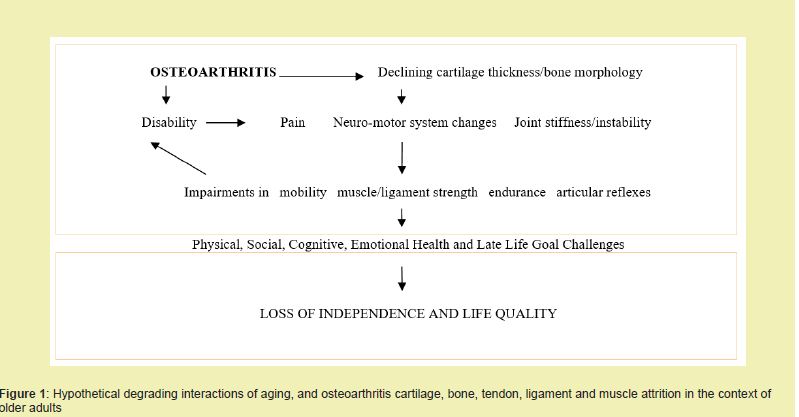
Electrical field stimuli on joint soft tissue and support structures that seem possible may well foster the attenuation of any rapidly progressive joint derangements that can significantly reduce confidence as well as daily living, coping functions and motivation to comply with health recommendations or control their health risks.
Applied PEMF usage barriers
One pulsed electromagnetic field application barrier in this regard voiced for some time is the persistent controversy regarding the degree of influence afforded by pulsed electromagnetic field applications to an affected osteoarthritis joint[s]. This dilemma persists despite evidence pulsed electromagnetic field stimulation, a non-invasive treatment that utilizes electromagnetic fields to reduce inflammation and promote tissue repair can engender pain benefits and others both in the laboratory as well as clinically.34,35 Indeed, even though not fully accepted as mainstream, or a topic avidly studied in the clinical realm, especially in joints other than the knee, strong evidence of its varied mechanistic impacts not only appear remarkable, but of high clinical salience.
However, as in prior decades, we found it challenging to verify unique PEMF application benefits in the clinical realm in 2025 especially among older adults. We thus deemed it best to rely largely on what we have learned from both multiple preclinical studies and others that are often insightful and well designed and tentatively offer a gateway that can be translated to the future bedside.
After studying this topic for many years, and to meet the aims of this review, we elected to garner some current and past information on this issue and others posted over time on PUBMED, PubMed Central, and GOOGLE SCHOLAR accepted as reliable peer reviewed medical literature sources. Key words used were: Articular Cartilage, Older Adults, Osteoarthritis; Pulsed Electromagnetic Fields, Repair. All forms of study were accepted, but no systematic analysis or synthesis of either the preclinical or the clinical literature was attempted-given their diversity and limited numbers of uniformly oriented studies. A focus was placed largely on selecting and reviewing preclinical data and their clinical implications for offering a path to pain relief, tissue repair, and functional gains as here PEMF is studied in isolation rather than as an adjunct form of therapy. Discussed in narrative form, an attempt was made to identify mechanistic explanations for PEMF observed effects and their implications. Protocols for future study, studies of adults younger than 60 years of age or other forms of arthritis, conference proceedings, trans-cranial application, direct current, and invasive studies, combination therapy studies, nutritional and taping/bracing and stem cell studies were excluded as were many early citations covered in the reference sections of references.32,33 It was assumed most studies reviewed here were acceptable to experts in the field who had reviewed them, and these discussed were chosen so as to either highlight some aspect of the current topic of interest either independently or combined. While we recognize those published may not have included all negative findings that have not proved acceptable, with over 50 years of related inquiry, it was assumed a general picture of the state of the art would be attained with relative confidence when assessed very carefully and across multiple perspectives and substrates. Readers interested in clinical and past analyses and observations and future possibilities may want to examine references.11,31-33
In the interim, while yet unproven, we accepted the growing notion that it is possible a pulsed electromagnetic field current is one that can be manipulated to induce or stimulate biological tissue impacts relevant to osteoarthritis mitigation. This includes its cartilage chondrogenic differentiation potential, its known impact as a cell function stimulator and activator,33 its bone healing and stem cell engineering potential.32,33 plus improvements in muscle energy expenditure during constant-load exercises along with muscular activation34 as well as its anti-inflammatory effects.35
Several past studies show the osteoarthritis joint topic presently studied is one that persists with over 130,000 PUBMED related studies over time, 60,000, 26,000 on the knee and hip respectively, 8000 on the hands, 4800 on the shoulder joint, and 87/606 as related to PEMF including all joints. Increasingly common among adults older than 65 years of age, osteoarthritis primarily implicates the thin covering tissue at the surface of bones located of one or more freely moving joints, and where pain is the predominant resultant outcome.
At the same time, most conservative therapies, including pharmaceuticals, injections, and physical therapy are only modestly successful in reducing pain or in reverting or attenuating the condition to any clinically meaningful degree. As a result, many older adults may suffer unduly since not only are their individual needs and unique disease manifestations poorly identified or understood, but their suffering may hasten the need for joint replacements or surgeries often considered if conservative measures appear ineffective.
However, even if offering relief, neither drugs nor surgery are found to yield regenerative or reparative outcomes to any degree and their long-term impacts remain in question. For example, they do not foster cartilage repair vital to protecting the joint from impact. Thus, other adjunctive forms of noninvasive therapy with possible regenerative properties are being studied more intently to discern if any may prove safe as well as clinically effective in combating or mitigating articular cartilage destruction and malfunction.
Indeed, since the early 1970s when several researchers began to examine pulsed electromagnetic fields and their interactions with cartilage and bone cells, this topic has continued to be of interest and very informative in the context of its basic potential to mitigate the hallmark of osteoarthritis pathology, namely articular cartilage degeneration and thinning and fragmentation. Most, albeit not all, do in fact continue to largely lend support to using or studying this mode of physical energy as a form of osteoarthritis therapy in this regard, regardless of methods of inquiry that includes an array of cell culture assays, animal models of osteoarthritis, animals with naturally occurring or age associated osteoarthritis, stem cell substrates and cartilage and bone explants.32,33 Its anti inflammatory, bone and muscle morphology, cartilage histology, muscle activation, and contractile effects may especially help slow the rate of osteoarthritis progression.25,34
In addition to having direct cartilage cell/chondrogenic effects, Zhou35 report pulsed electromagnetic field therapy applied to artificially deranged joints may inhibit the expression of pro-inflammatory factors that can otherwise induce or hasten cartilage matrix degradation.16 Furthermore, their pre-clinical study showed pulsed electromagnetic field-treated osteoarthritis induced mice demonstrated post stimulation joint structural enhancements and a preserved joint structure. As such, it appears joint motion and stability and the ability to withstand joint impacts may improve substantively post stimulation36 as may muscle healing post PEMF and stretching exercise when combined37 as well as muscle healing rates where applicable, and the prevention of fibrosis and inflammatory-induced muscle pain.38
Along with its pain-relieving potential, pulsed electromagnetic field applications may thus enable more desirable osteoarthritis outcomes than not thus averting excess bouts of chronic daily stress as well as distress and degrees of suffering. At the very least it appears this is not necessarily a placebo effect, but one where pulsed electromagnetic field applications are found to be exerted and play a key role in countering the potentially devastating impact of osteoarthritis generated degrading joint enzyme cascades, and their destructive catabolic outcomes.35 On the other hand, objective data show possible post PEMF stimulation benefits in tendon morphology lesions,38,39 adhesions formation or tendon ruptures, function and osteoarthritis progression.40,41 Importantly, PEMF stimulation appears to significantly attenuate the structural and functional progression of osteoarthritis, along with the magnitude of verifiable cartilage chondrocyte death processes and counter stimulation of joint based protective responses.
Wang42 report pulsed electromagnetic stimuli can foster a state of cartilage chondrocyte proliferation, while exerting a protective effect on cartilage cell catabolic actions and their impact on the cellular environment, including placing excess strain in joint tissues such as its tendons. Furthermore, this technique is beneficial for allaying destructive changes in the subchondral trabecular bone micro architecture realm and thereby for subsequent prevention or retardation of excess bone loss or derangement, bone pain, inflammation, and disease progression. Moreover, Cadossi43 propose these aforementioned results and others are not unexpected if one considers that cell membrane receptors at the stimulation site appear responsive to electromagnetic stimuli and that appear to induce signals that foster the synthesis of intra and extracellular matrix components within cartilage and bone, as well as surrounding muscles and support structures.
Additionally, this form of stimulation may not only serve an anti-inflammatory role,44 but one that favors the expression of anti-oxidant enzymes21 as well improvements in bone architecture as well as muscle and tendon architecture.14,21,27,45-52 Moreover, therapeutic electromagnetic fields may mediate desirable improvements in osteoarthritis muscle fiber alignment, force transmission capacity, contractile function, neuromotor response functions, muscle recovery and protection against progressive harmful degenerative joint loading impacts.50-53 Additionally, its impact on long lasting inflammatory control may promote a favorable tissue regeneration environment, as well as heightened muscle and tendon cell responsiveness,44 muscle pain control and function.21,51,53,54
Additional observations
Conceivably, the application of PEMF may help to improve an osteoarthritis older subject’s strength capacity and associated ability to perform activities of daily living with less discomfort than in the absence of treatment.50,54,55 In a disease context where muscle is a key pathogenic factor, this benefit alone may prove remedial and may help the subject to decrease any reliance on opioid medications and others, plus excess use of invasive strategies, health services, and surgery. Additional beneficial chondrocyte viability impacts56 as well as anti-inflammatory effects that reduce cartilage damage and noxious osteoarthritis symptoms57 may similarly foster a lower rate and degree of osteoarthritis progression, as well as heightening muscle strength capacity, functional gains and depressive symptom relief.58
Tentative clinical relevance
As has been the case for more than two decades, currently published preclinical and clinical studies examined in this overview continue to favour some form of pulsed electromagnetic field stimulation as far as having beneficial cartilage cell, muscle, bone, function, and pain impacts in the context of older age adults with life impeding osteoarthritis. However, as in many past and current realms of inquiry, these consistently affirmative and promising data found largely in non-clinical studies have not been validated and must be extrapolated with some caution to the bedside. In this regard, these are very promising data in our view if we consider at the very least, they can foster an array if desirable osteoarthritis tissue repair processes, and positive impacts on muscle structure and function and those diverse clinical attributes as outlined below.
- a. The careful application of pulsed electromagnetic field stimuli to a diseased joint or a specific joint site has the potential to improve its functional and mechanical properties including its cartilage and bone tissues via endogenous mechanisms.7,57-73
- b. As per Masante2 results will depend on the nature of the applied biophysical stimulation parameters, the joint site irradiated and degree of damage, and exposure frequency and duration.
- c. Its optimal efficacy however, surely demands the modality be applied insightfully, and with due care, parameter selection, and precision by physicians and patients.44,71
- d. The use of a comprehensive descriptor to enable the identification of common features across different studies could serve as a valuable tool for refining PEMF protocols and establishing standardized guidelines to support bone and cartilage repair explorations.2
- e. The failure of most clinical studies to employ advanced technologies that can detect cartilage, bone, and tendon cell transformations at the nano molecular level as well as serum assays and functional mechanics weakens the chances for valid insights of high veracity to emerge.
- f. PEMF exposure may represent a non-invasive and non-strenuous method of ameliorating or preserving proprioception, sensory nerve function, chondro-and osteogenesis, and joint inflammation, and for augmenting the execution of physical exercise.34,57,71,73
- g. Diverse functional improvements in early-stage osteoarthritis, arthroscopy patients, anterior cruciate ligament reconstruction as well as joint replacement surgery are anticipated in a short time frame post electromagnetic stimulation therapy.3,60-64,67,76
Unfortunately, the available clinical evidence is not only limited in quantity, but what is published is generally considered far from representing resounding quality and generalisability.
Not only are experimental osteoarthritis substrates likelt not the same as the human substrates, but, in terms of pulsed electromagnetic applications found to foster laboratory based joint tissue healing may not occur clinically if the parameters and dosage used clinically are suboptimal at best. As well, joint protection in the real world may not be a given and is a factor often ignored as a possible deterrent to the success of therapy. In addition, the concomitant usage of narcotics and other medications plus invasive injections to quell pain may inadvertently exacerbate or foster joint usage, impact loading and joint attrition.
However, considering the promise of PEMF and in light of the projected and present osteoarthritis social burden, immense health and economic costs the topic appears understudied or poorly studied at best, but is one that appears essential to explore, rather than overlook.65,66 Moreover, pursuing the idea that carefully considered integrated therapy efforts as well as optimally designed and controlled studies that proceed in the face of optimal PEMF exposure and stimulus dosage and amplitudes can specifically activate target cell magnetic sensors will likely prove efficacious and advantageous.44,67,71 Mechanisms potentially affording cartilage repair are multiple as depicted in Figure 2 below.68,69
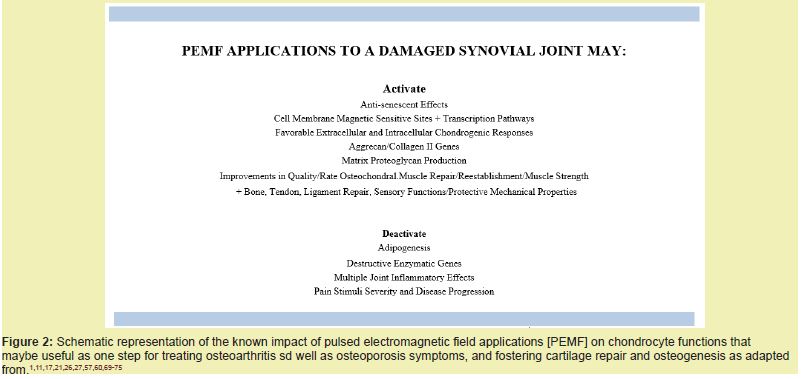
Despite decades of study, osteoarthritis remains poorly understood and treated despite its growing high social and economic relevance. Help that is therapeutic, revitalizing and safe using non invasive non toxic passive methods are however increasingly indicated for the older adult. As such, PEMF discussed herein appears to offer one avenue of relief, especially among aging adults where age and pain are correlated with radiographic osteoarthritis structural damage.57 However, in this brief current overview, it appears safe to say in vitro applications derived from simulations of osteoarthritis in animals and cell cultures that are highly promising do not translate readily to the bedside.
These include cartilage, bone, tendon tissues, nerve and muscle repair that alone could afford pain relief in selected cases.10,11,58-62 Moreover, several notable plausible evidence based mechanisms appear to support its use in reducing inflammation that greatly mars the ability to mitigate the osteoarthritis condition.
To guide challenges faced by health providers in the realm of chronic osteoarthritis in the high aged adult, and its immense related personal and societal burden, we believe the number of positive laboratory based preclinical study results clearly justifies its potential efficacy for osteoarthritis mitigation that must warrant consideration, even if other interventions are indeed helpful and take less time. This is because the ability of most traditional support therapies to directly impact the actual joint pathology is quite limited and/or can undoubtedly foster one or more disabling physical, social, or mental health disease correlates. Optimal chondrogenic outcomes in this regard can indeed be achieved in response to a single, brief, low intensity exposures to 6ms bursts of magnetic pulses applied to the chondrocyte source and must thus have immense clinical implications for osteoarthritis sufferers.
In addition, it is possible its insightful application using thermal doses may yet relieve pain and muscle spasm that accompanies the disease. Its application may alleviate bone marrow lesion pain, as well as the degree of bone micro fractures and bone damage known to hastens the progression of osteoarthritis to a high degree. It also appears cartilage cells and their molecular pathways can be favourably stimulated by appropriately selected pulsed electromagnetic field parameters,71 as can muscle, nerve, and supportive joint tissue structures. Moreover, even if regeneration is not evidenced adequate data points to the fact joint degradation can be reduced or minimized post PEMF.31-33
One or more of these post stimulation PEMF benefits, even if yet unproven and hypothetical, are clinically important to acknowledge and should be duly sought in our view, because it is likely their careful applications may obviate the need for a fair number of older adults with disabling osteoarthritis to resort to narcotic usage that may prove addictive. Its anti-inflammatory, effusion, and pain reducing properties alone may be of great value if they prove equally valuable in helping the affected individual to exercise, especially important in early as well as late life osteoarthritis. The stimuli may induce effects comparable to those attributable to exercise via the use of electromagnetic field therapy applied independently or as a therapy adjunct.
In addition, because pulsed electromagnetic fields can be applied safely alone or in combination with other treatments, possible functional benefits may emerge without any possible injury to joint neural structures that may be debased by nerve blocks, intra articular injections, or surgery. Unlike exercises, these magnetic waves can be applied even in the absence of movements that are often hard to perform in the case of pain. Benefits may also extend to opportunities to effectively reduce joint swelling, inflammation and muscle atrophy, as well as more optimal post surgery healing effects, and cartilage preservation. Indeed, the active adjunctive application of PEMF could not only be efficacious in its own right, but a useful adjuvant treatment to exercise programs in individuals with joint disease in the medium term36 and long term51 where it may foster mobility benefits, as well improvements in collagen production and muscle regeneration.8 Potentially too, carefully designed treatments may help avert or postpone the need for invasive surgery or improve their outcomes. However, outcomes may depend on accurate diagnoses, selection of the wave forms and whether these are tailored insightfully based on the client’s health profile and what is known as regards both the cellular as well as the molecular responses of joint genes to PEMF bio stimulation.
To this end expanding upon the promise of this understudied modality as a more standard form of osteoarthritis therapy has been discussed.77,79 This idea cannot clearly rest upon solid underpinnings from preclinical investigative efforts, but must depend on future observation efforts that target and detail possible salient clinical intracellular mechanisms of electromagnetic field bone, cartilage, and muscle stimuli of various parameters and an array of valid agreed upon biomechanical, biochemical and neuromotor outcome responses with adequate reliability and sensitivity properties. As well, the most optimal stimulation duration and dosage and its long term efficacy should be identified.77-80
As of October 10 2025 we conclude that although many older adults suffer with osteoarthritis, they do so without much relief, and despite favourable preclinical related observations of possible relief and even disease regression or repair post electromagnetic stimulation. In particular we conclude a useful treatment may be overlooked because of the limited number of studies as well as shortcomings of these clinical studies that cannot easily be aggregated. Moreover, an inconsistent array of studies where most fail to apply clinically meaningful well designed research designs and validated outcome measures often lack power and are implemented for short durations.
However, while this broad based overview may not have included all available studies, and the quality of those identified cannot be readily established in many cases, it appears safe to offer four potentially clinically relevant reflection points that encapsulate the state of the art in 2025.
As such, and after studying this topic for many years, we believe very little counter evidence prevails and most current authors imply it is still worthwhile to pursue the PEMF osteoarthritis connection in light of the increasing rates of worldwide suffering among the older population from potentially treatable osteoarthritis pain and success in advancing PEMF healing understandings. Here, we advocate with reasonable confidence that clinicians can still consider applying pulsed electromagnetic field treatments to quell osteoarthritis pain and to foster function and possible cartilage repair/maintenance, especially if applied sooner rather than later.
We further propose-
- 1. Osteoarthritis, a common painful joint disease affecting many older adults is one warranting more study of its origins and regenerative capacity.
- 2. Non invasive low frequency pulsed electromagnetic field applications may provide a safe and well tolerated form of biophysical energy that can be harnessed and titrated to promote patient specific osteoarthritis damaged tissue healing, cartilage viability, and bone repair.
- 3. As well as attenuating joint pain and inflammation, older individuals with chronic osteoarthritis may benefit functionally from the application of pulsed electromagnetic fields to their affected joint[s], especially if applied at the outset of the condition and to foster physical activity.
- 4. Validating and clarifying the potential of pulsed electromagnetic fields and its biological impacts on joint status at multiple joint sites of diverse sub groupings may reduce considerable suffering well as health care costs.
- 5. Extending research efforts to embody the features of the whole joint and their interactions in the older adult population, if impaired, as well as with their reaction to pulsed electromagnetic field therapy plus its added impact on possible complementary interventions such as collagen intake maximization, joint protection approaches, and muscle strength training is also likely to prove highly promising.
- 6. Despite some disputes, the observable transcriptional, cellular and sub-cellular molecular effects of PEMF that appear to foster cartilage, muscle, ligament, tendon, nerve and bony tissue repair or reverse this disease process are mot artefacts but are especially noteworthy.
Factors influencing pulsed electromagnetic field outcomes include their electrophysiological parameters, the stimulated cell configuration, the stimulation mode and duration, the pathological state of the stimulated tissue and cells. Mechanistic explanations for PEMF effects are its ability to interact with cell surface membrane receptors to enable transduction signals that up regulate anabolic processes, and DNA and collagen synthesis and down grade damaging disease associated catabolic reactions and enxymes a possible reduction in the degree of cell death processes.
By understanding the signaling pathways and cellular responses to PEMF stimulation, osteoarthritis clinicians and researchers can potentially harness the full potential of this therapy for improved patient outcomes. Other approaches such as joint protection, taping, vitamin D and C supplements and weight management are likely essential as well. Future directions should embrace early osteoarthritis detection, personalized intervention strategies, and combination therapies.
None.
This Research Article received no external funding.
Regarding the publication of this article, the author declares that he has no conflicts of interest.
