

The study assessed the heavy metal concentration on the organs of Shinna (Trachurus trachurus), Scombia (Scomber scombrus) and Cod (Gadus morhua), which are commonly sold and consumed in Owerri, Imo state Nigeria. The following metals; Cadmium, Lead, Nickel, Silver, Chromium, Mercury, Vanadium, Manganese, Arsenic and Aluminum, were determined on a total of three (3) organs per fish; namely liver, gills and muscle. Collection of the fish samples was done in triplicate within the Ekeonunwa market that was sampled and a total of three (3) organs per fish and nine (9) organs in all were determined. Levels of heavy metals specified above, were determined by air-acetylene flame Atomic Absorption Spectrophotometer (AAS) after digestion of the samples using HNO3 according to the standard analytical methods. The data were statistically analyzed using ANOVA of the Statistical Package for Social Sciences (SPSS) 6.5 window application. The result showed that the fish tissues, appreciably bio accumulated these metals with a high concentration profile with that of Silver, Chromium, Mercury and Arsenic, above the toxicological threshold limits recommended by FAO/WHO for fish, while Nickel, Cadmium, Lead, Vanadium, Aluminum and Manganese, were below the limit of FAO/WHO. However, in fish tissue, the results show that the liver and gills bio accumulated the highest concentration of most metals. Continuous consumption of these fishes, might lead to bioaccumulation of these metals in humans to toxicity levels. Based on the result of the findings, the fishes studied may be unfit for human consumption, except they are properly degutted before cooking and possible consumption. Improved handling and sanitation conditions of our local markets in the state is therefore recommended to avoid food borne diseases also homestead/subsistence aquaculture to raise organic and healthy fishes for family consumption with assurance on quality and safety, is advised.
Keywords: Trachurus trachurus, Scomber scombrus, Gadus mohua, Bioaccumulation, Ekeonunwa, threshold limits, SPSS
Heavy metal pollution of water has become a major environmental problem almost since the advent of agricultural and industrial revolution and today most water resources are still being contaminated with heavy metals released from domestic, industrial and other man-made activities.1,2 The threat of toxic and trace metals in the environment is more serious than those of other pollutants due to their non bio-degradable nature, accumulative properties and long biological half-lives. It is difficult to remove them completely from the environment once they enter into it.3 Heavy metal contamination may have devastating impacts on the ecological balance of natural water bodies including the loss of aquatic diversity.1,4,5
With increased use of a wide variety of metals in industries and in our daily life, there is now a greater awareness of toxic metal pollution of the environment. Many of these metals tend to remain in the ecosystem and eventually move from one compartment to the other within the food chain.6 Fish are often at the top of aquatic food chain and when pollutants build up in the food chain, fish are widely used to evaluate the health of aquatic ecosystems. Fish may concentrate large amounts of metals from the water and therefore are responsible for adverse effects and death in the aquatic systems.7,8 The concern about the high levels of trace metals in foods has prompted several statutory bodies such as the WHO to establish maximum allowable concentrations for some of the metals in food.9 Thus the World Health Organization (WHO) as well as the Food and Agriculture Organization (FAO) of the United Nations state that monitoring eight elements in fish Hg, Cd, Pb, As, Cu, Zn, Fe, and Sn, is obligatory while the monitoring of others though not obligatory, may be useful.10 The assessment of metal burden in fishes and water bodies will create greater environmental awareness regarding the consumption of water and fishes.11 Metals, particularly heavy metals such as lead, mercury, cadmium and arsenic constitute a significant potential threat to human health, both occupational and environmental.12 The levels of some elements can be related to various pathological conditions in man, hence the determination of trace elements is therefore considered as a useful and important test in surveys of environmental pollution. In the aquatic organisms, it provides information about bioaccumulation and bio-magnification processes. Fishes are widely consumed in many parts of the world by humans due to their high protein content, low saturated and significant omega-3 fatty acid known to support good health.13 Nearly everything that can be found on land eventually makes its way to a stream. This is because every bit of ground or earth is a part of some rivers water shed.14 The contamination of freshwater with a wide range of heavy metals has become a matter of urgent concern over the past decades.
These metals gain access into the aquatic ecosystem through anthropogenic sources from agricultural practices (example the use of fertilizer, herbicides, pesticides etc), industrial activities (gaseous, liquid and solid wastes) domestic sewage, mining etc and natural processes such as weathering and erosion of geological matrix which get distributed in the water body in form of suspended solids and sediments during the course of their mobility.15 Fishes inhabit aquatic environment and cannot escape deleterious effects of these pollutants16 and are extensively used as model to evaluate the health status of aquatic organisms. These pollutants enter the fish body via gills, skin and oral consumption of water.8
Fishes are also richest sources of Omega-3 fatty acid, polyunsaturated fatty acids. Many studies have shown that eicosapentaenoic acid (EPA or 20 Omega-3 fatty acid) and docosahexaenoic acid (DHA or 22:6 Omega-3 fatty acids) are present and in important amounts in fish tissues.17 Heavy metal pollution and its management has been a major concern to environmentalists due to its non-biodegradable and hazardous nature. When fishes are exposed to elevated levels of heavy metals in an aquatic environment, they can absorb the bio-available metals directly from the environment via gills, skin or through their ingestion of contaminated water and food. Excessive levels of these heavy metals are toxic and can damage the cells of the living organisms.18 Increase in industrialization, scientific and technological development, expanded human populations, oil exploitation etc have all led to severe ecological degradation of Nigerian inland water bodies as a result of pollution.19 This problem is not restricted to Nigeria alone as contamination of aquatic ecosystem by heavy metals is treated as a global problem affecting water, soil, sediment, fish and eventually man.20
Sample collection
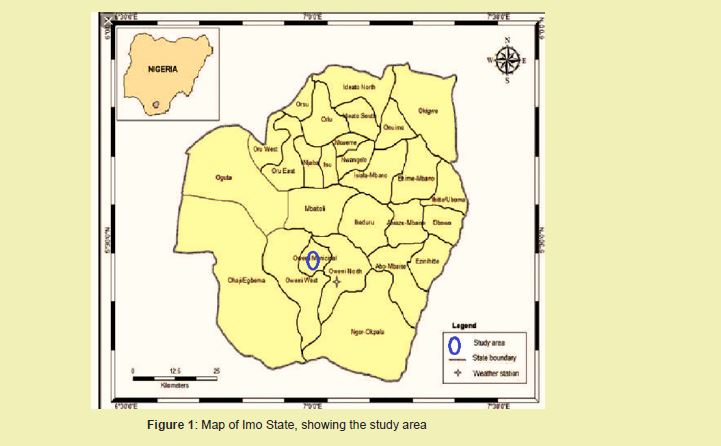
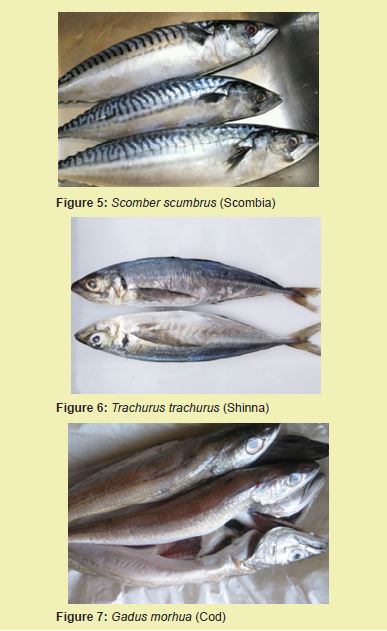
Three (3) species of marine fishes most commonly sold within Ekeonunwa Market Owerri municipal Imo State were randomly selected for the study. These include; Scomber scumbrus, Trachurus, trachurus, and Gadus morhua, thesewere purchased from a very busy market (Ekeonunwa), in the very heart of Owerri municipal, Imo State. The fishes were taken to the Department of Fisheries Technology Federal Polytechnic Nekede Owerri, Imo State for proper identification Figure 1.
Sample preparation
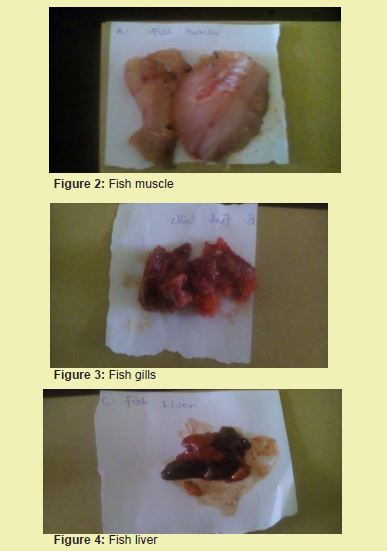
The fish samples gotten from the various markets were transported in an icebox to the laboratory. Each of the fishes was weighed and the total length take before the cleaning and dissection began. The fish samples were thoroughly cleaned and then dissected with a clean stainless steel knife. The gills, liver and muscles were separated from each sampled specie and labeled accordingly. The separated fish organs were oven dried at 1050C for one and half hours and ground into powdered form using an electrical grinder. The oven-dried samples were packed in an air tight container, labeled and stored in a desiccator until ready for use in subsequent chemical analysis which was in triplicate.
The Different fish organs used during the study
The different fish species used for study
Digestion of samples
The samples were ground to fine power and stored in desiccators in order to avoid moisture accumulation before digestion. The digestion procedure was carried out as described by Kotze21 20 ml of concentrated nitric acid (55%) and 10 ml of perchloric acid (70%) were added to approximately 1g tissue (dry mass) in a 100 ml Erlenmeyer flask. The digestion was done on a hotplate (200 to 250oC) until the solutions are clear. The solutions were then filtered through an acid resistant 0.45 mm filter paper and made up to 50 ml each with distilled water. The samples were stored in clean glass bottles prior to the determination of the metal concentration using Atomic Absorption Spectrophotometer (AAS). Stock standard was prepared by dividing the molar mass of the element. The standard solution prepared was used to calibrate Atomic Absorption Spectrophotometer (AAS). The prepared sample was aspirated into the AAS; the air, the fuel of the instrument (acetylene) and the sample, formed aerosol inside the AAS. About 10% of the aerosol goes into the flame and 90% passed out as waste. The flame vaporized, dissociated, and atomized the samples from ground state to excited state. The readings were taken from the equipment in mg/g and the results were converted to mg/kg which is the actual concentration of the metal in the sample.22
Statistical analysis
Data were analyzed using one-way analysis of variance (ANOVA) to compare significant differences between treatments, whereas Duncan’s multiple range tests was used to compare the means of the treatment. The data was analyzed using SPSS version 16.0 software.
Cadmium
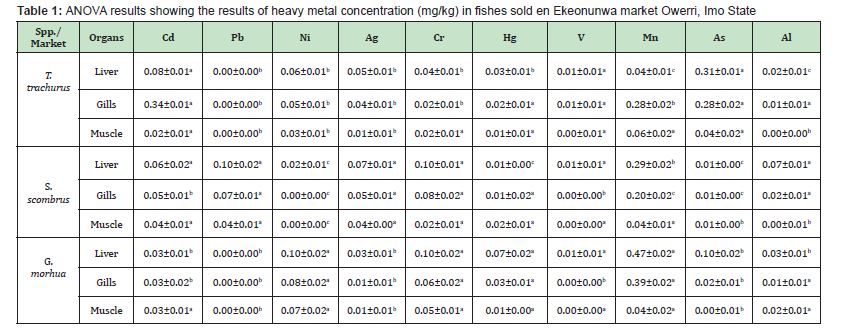
Cadmium concentration in the investigated fish species ranged from 0.02 ± 0.01 mg/kg to 0.34 ± 0.01 mg/kg. The highest concentration of cadmium (Cd) was recorded in the gills of T. trachurus and the least concentration was recorded in the muscles of T. trachurus. From the results, the values of Cd obtained from all the studied samples were below the maximum acceptable standard of 0.1 mg/kg set by the FAO/WHO except for the gills of T. trachurus. Since all the organs recorded some levels concentration of cadmiumindicating that the sampled species with evidence of cadmium pollution carries attendant health consequences. The values of Cd in this study are lower than values reported by.22 Although the absorption of cadmium is low, it has a long half-life because it accumulates in the body and it may bioaccumulate in all levels of aquatic and terrestrial food chains.23 Industrial processes such as smelting or electroplating and the addition of fertilizers can increase the concentration of Cd in the environment. It could be advised that the liver and the fish visceras should be removed before cooking.
Lead
Lead is described as a classical chronic or cumulative poison, which may result in neurological, hematological, behavioral, renal, cardiovascular and reproductive effects at levels above the tolerable limit.24 Lead concentrations were highest and in the liver of S.scombrus compared to other species and this may be attributed to the feeding habit of this specie as well as the level of habitat contamination. The concentrations of metals in gills reflect their concentration in water where the fish lives; whereas the concentration in the liver represents storage of metals in water.25 This is because the liver is the primary organ responsible for the detoxification, transportation and storage of toxic substances.26
Nickel
Accumulation of Nickel and Nickel compounds in the body through chronic exposure may be responsible for a variety of adverse effects on the health of human beings, such as lung fibrosis, kidney and cardiovascular diseases and cancer of the respiratory tract.27,28 Over time, if the degree of Nickel pollution in aquatic environment is not controlled, the level might likely rise resulting to toxicity. The highest concentration of Nickel (Ni) was recorded in the liver of G. morhua (0.10 ± 0.02 mg/kg) while the least was recorded in the gills and muscle of Scombia (S. scombrus) (0.00±0.00 mg/kg).
Silver
Silver is of no biological importance and is potentially one of the most toxic metals to the freshwater and marine fish, and primarily it will affect the osmoregulation of gills.29 Its toxicity varies widely among different organisms and silver speciation.30 However, the fate, behavior and mechanism of silver toxicity to aquatic organisms are poorly understood. Continues consumption of silver contaminated fishes could result in agyria, which results in a greyish pigmentation of the skin and mucous membrane. The highest concentration of silver (Ag) was recorded in the liver of S. scombrus (0.07±0.01 mg/kg) while the least concentration was recorded in the muscles of T. trachurus as well as in the muscle and gills of G.morhua recording 0.01±0.01 mg/kg.
Chromium
The highest concentration of Chromium was recorded in the liver of G. morhua and S. scombrus (0.10±0.02 mg/kg and 0.10±0.01 respectively), the least concentration was recorded in the gills T. trachurus of and muscles of T. trachurus and S. scombrus (0.02±0.01). From the result presented, chromium (Cr) was bioaccumulated in all the organs investigated in the market. The concentration of Chromium in the liver of S.scombrus and G. morhua fish samples; livers and gills were higher than the limit of 0.1 mg/kg recommended by FAO/WHO.31
Mercury
Mercury is a natural occurring metallic element which can be present in foodstuffs by natural causes. Fish ingest contaminated mercuric food which passes through the gastrointestinal tract and gets distributed, accumulated or detoxified by the liver.32 This metal is absorbed by the gills and carried by the blood stream to the liver where it is detoxified and excreted as bile before it gets to the flesh, leading to the less toxicity of heavy metals in the flesh.25 The highest and least concentrations of mercury (Hg) were recorded in the liver and muscle of G .morhua (0.07±0.02 mg/kg and 0.01±0.00 respectively). The sampled fishes, bioaccumulated Mercury (Hg) at varying level in the market, but were all below the WHO maximum level of 0.5 mg/kg.
Vanadium
Vanadium compounds are poorly absorbed through the gastrointestinal system. Inhalation of vanadium and vanadium compounds result primarily in adverse effects on the respiratory system. Other effects have been reported after oral or inhalation exposures on blood parameters, live, neurological developments.33,34 An increase in vanadium consumption in humans can cause harms including anemia, inflammation of the eyes and lungs, cataract, cognitive deficits, diarrhea, and decrease in appetite in consumers.35 The highest concentration of vanadium which is 0.01±0.01 mg/kg, was recorded in the liver of the three sampled fish species and the gills of T. trachurus.
Manganese
The symptoms of manganese toxicity include tremors, muscle spasms, hearing problems, mania, insomnia, depression, loss of appetite, headaches, irritability, weakness and mood changes. The highest Manganese concentration of 0.47±0.02 mg/kg was recorded in the liver of G. morhua, while the least of 0.04 ±0.01 mg/kg and 0.04±0.02 mg/kg, was recorded in the muscles of S. scombrus and G. morhua. The concentration of manganese in this study was below the WHO limit of 5.5 mg/kg which makes the fishes sampled free of manganese toxicity, though it could be rcommended that viserals of frozen fishes should be discarded to reduce the rate of bioaccumulation in humans.
Arsenic
Arsenic has many ill effects in our health mainly through drinking water and food that can lead to chronic arsenic poisoning, skin lessions and skin cancer. Arsenic has affinity towards the SH group of proteins that leads to inhibition of cellular respirations, impaired glycolysis and oxidative stress process and finally death of cells.36 Most of the paints, dyes, soaps, metal semi-conductors and drugs contain Arsenic.37 Arsenic poisoning in human being can cause cancer of the lungs, liver, bladder and skin. Since liver and gills bioaccumulate the highest Arsenic it could be advised that all visceral should be discarded before cooking. The highest concentration of Arsenic (As) (0.28±0.02 mg/kg) was recorded in the gills of T. trachurus and the least (0.01±0.00 mg/kg) was recorded in all the organs of S. scombrus. The concentrations of Arsenic in all the species organs were above the WHO permissible limit of 0.01 mg/kg rendering the fishes unfit.
Aluminium
Aluminium exposure may result in nephrotic syndrome and acute renal glomerulonephritis. Its toxic effects can reduce glomerular filtration, leading to elevated serum uric acid levels. It was observed that the highest and least concentrations of Aluminium (0.07±0.01 mg/kg and 0.00±0.00 mg/kg), was recorded in the liver and muscle of S. scombrus. From the results obtained, Aluminium was found to bioaccurmulate in all the organs investigated during but was to a great extent, below the WHO maximium permissible level of 0.5 mg/kg which means the sampled fishes are free of metal toxicity but continuous bioaccumulation can lead to biomagnification with lethal effects.
Heavy metals unlike the most contaminants in the environment are not ruined and pass an ecological cycle during which natural waters are the main pass. The highest concentration of heavy metals is usually found in aquatic environments and aquatic environment bed sediments. Therefore, being informed of heavy metal concentration and their dispersion in sediments and aquatic bodies can play a major role in pollution resources in aquatic systems.38,39 Heavy metals are concentrated in tissues and organs of aquatic animals especially fish after entering the aquatic ecosystems and they finally enter the food chain. Since fish forms a main part of human diet, these heavy metals can enter the human body via feeding of contaminated fish. The absorption and concentration levels of heavy metals in aquatic animals especially fish are dependent on biological, chemical, physical and ecological conditions of water, element type, aquatic animal and physiology of the creature body.40 Metal concentration in fish usually depends on the species, habitat, fish activity, diet, or other related behaviors.41 The rate of bioaccumulation and the ability of the fish to detoxify a particular metal differs greatly, this may account for the variation in the concentration of heavy metals found in the different species of fish investigated in this study. The high accumulation of Nickel and other metals in the study samples could be as a result of high concentration of the elements in the natural habitat. The level of industrial and anthropogenic activities around the water determines the concentration level in both water and fish. Variations in heavy metals levels between studies seemed to be attributed to the difference between fish species, and geographical location. It is therefore recommended that measures and policies, be put in place by government to check and control the handling process of fishes sold in the markets by health inspectors. The prices of fish and meat should be subsidized through government intervention to make fish and fish products readily available at an affordable rate. The heavy metal levels in imported frozen fishes sold in Imo State must be continuously monitored to provide adequate information necessary for effective and prompt intervention in case of extreme contamination. People should be encouraged to go into homestead/subsistence aquaculture to raise organic and healthy fishes for their family consumption with assurance on quality and safety.
Ubaka KG: Analysis, Writing. Ekwuonu NA: Supervision, Review, Ogah OJ: Writing, Review, Editing, Resources, typesetting and research writing and Ogueri C: Supervision, Review.
None.
This Review Article received no external funding.
Regarding the publication of this article, the author declares that he has no conflicts of interest.
