

Youth with visual impairments (VI) face unique sleep challenges due to disrupted circadian rhythm synchronization, yet despite evidence linking physical activity to improved sleep, a recent scoping review identified only five relevant studies in this population, none of which directly examined this relationship to address this gap, the purpose of the present study was to examine the relationship between sleep and physical activity and mental health in youth with VI. Participants included 37 youth (boys = 18; girls = 19) ranging in age from 9 to 19 years. Degree and onset of VI varied among the sample with six being congenitally blind, 11 with the most severe VI, and 26 with greater vision. Participants completed a sleep assessment (School Sleep Habits Survey (SSHS)), a fitness assessment (supine to stand), a physical activity assessment (Rapid Assessment of Physical Activity (RAPA)), and a quality-of-life assessment (VISION-QL).within a period of five days during the summer. Over one-third of children and adolescents (38.2%) did not meet age-appropriate sleep duration recommendations, and weeknight sleep onset latency averaged 32 minutes, exceeding recommended thresholds. Children with VI meeting sleep recommendations had significantly higher flexibility and strength-based physical activity scores than those who did not (p = .017), and longer weeknight total sleep time was positively correlated with greater flexibility and strength activity (r = .36, p = .039). No significant associations were found between sleep variables and aerobic physical activity, with the exception of a positive correlation between aerobic activity and daytime sleepiness (r = .33, p = .047). Overall, physical activity appeared to influence sleep, and sleep was strongly associated with mental health among youth with VI similar to patterns observed in sighted peers. The ability to detect light changes is important for the circadian rhythm, which could have affected sleep in youth with VI. The present study provides initial insight into sleep in youth with VI. Future research should examine the impact of various levels of physical activity upon sleep.
Keywords: Blind, Mental health, Quality-of-life, Developmental research, Sensory impairment, Circadian disruption, Youth wellness
Abbreviations: CSHQ: The Children’s Sleep Habits Questionnaire; RAPA: Rapid Assessment of Physical Activity; SSHS: School Sleep Habits Survey; STS: Supine to Stand; VI: Visual Impairment
Sleep is essential for emotional regulation, cognitive performance, and physical health. Inadequate sleep can lead to daytime fatigue, poor concentration, irritability, low self-esteem, and nighttime disruptions such as sleepwalking or frequent awakenings.1 Conversely, sufficient sleep supports mental health and overall functioning.2 While general guidelines recommend 9–12 hours for children aged 8–12 years and 8–10 hours for teens,2 individual sleep needs vary based on age, lifestyle, and genetics.3 Importantly, sleep quality, how rested a child feels, is just as critical as sleep duration.1 Many factors can disrupt sleep, including medical conditions, sleep disorders, and environmental influences like inconsistent routines or family stress.1 Emotional stressors, such as anxiety and relational tension, can also delay sleep onset and increase nighttime awakenings.4
Despite clear recommendations, most youth are not getting enough sleep. CDC data shows over half of middle schoolers and nearly three-quarters of high school students do not meet the sleep recommendations on school nights.5 This trend isn’t new as sleep duration has steadily declined over the past century.6 Adequate sleep improves attention, behavior, and academic performance, while reducing risks for obesity, type II diabetes, and developmental delays.1-7 Practitioners should tailor sleep guidance to each child’s needs, focusing on how rested they feel and how well they function during the day.3
Circadian rhythms, our internal biological clocks, play a key role in sleep regulation. These rhythms are influenced most strongly by light exposure, which signals the brain to produce melatonin and adjust body temperature for sleep.8,9 Other factors like meals, physical activity, and stress also affect these cycles.10 Morning light helps reset the clock and promote wakefulness.11
Physical activity plays a protective role in sleep quality. Youth with lower fitness levels, especially reduced muscular endurance and cardiovascular health are more likely to experience sleep disturbances.12,13 Adolescents aged 11–16 years who engage in moderate to vigorous activity report better sleep outcomes, including faster sleep onset and improved sleep quality.14 Movement also supports physical recovery and helps regulate circadian rhythms.
For children with visual impairments (VI), sleep regulation presents unique challenges. Light perception is a key driver of circadian rhythms, and reduced sensitivity to light can disrupt biological clock synchronization. While adult studies show increased sleep onset latency, reduced total sleep time, and daytime fatigue in individuals with VI,15 these findings may not directly apply to children due to developmental differences. Moreover, research on sleep and physical activity in youth with VI remains limited. A recent scoping review identified only five relevant studies.16 Four used national datasets to assess adherence to physical activity and sleep guidelines, 60 minutes of daily movement and 8 or more hours of sleep depending on age.17-19 One intervention study involving ice skating showed improved sleep outcomes after three months, though the lack of a control group limits conclusions.20
While physical activity is widely recognized as beneficial for sleep, the strength of this relationship varies by developmental stage. Evidence is strongest in adolescents and young adults, with limited data available for younger children.21-24 Notably, no studies to date have directly examined this link in youth with VI, highlighting a critical gap in the literature. Therefore, the purpose of this study was to examine the relationship between sleep and physical activity in children and adolescents with visual impairments. Specifically, this study sought to characterize sleep patterns and physical activity levels in this population, determine the proportion of youth meeting age-appropriate sleep duration recommendations, and explore whether sleep duration and quality were associated with aerobic and flexibility/strength-based physical activity participation.
Participants
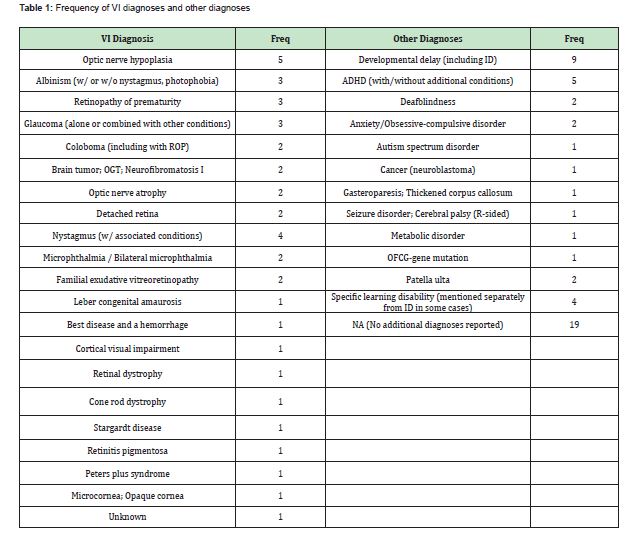
Participants were recruited and then assessed at a summer sports camp for children and youth with VI. Inclusion criteria involved any child who fit the basic criteria of being a participant at the sports camp. During registration, the parents filled out demographic information. Participants in this study included 37 children and youth with VI (18 males and 19 females) ranging in age from 9 and 19 years (M = 13.59 years, SD = 2.80 years). The mean BMI for the sample was 24.30 kg/m2 with a standard deviation of 8.00 kg/m2. Eight participants had a B1 level of vision (blind), with six B1’s being blind from birth, three were level B2 (travel vision), 18 were level B3 (legally blind), and eight were level B4 (low vision). Table 1 provides additional demographics of participants’ visual impairment diagnoses along with other diagnoses. Thirty-five participants attended a public school, one attended a school for the blind, and one attended a private school. Most of the participants were White (n=21), 5 participants were Asian, 4 were Black, 3 were Black and White. Thirty-four participants were not Hispanic/ Latino, and 3 participants were Hispanic/Latino. Over 20 different types of visual impairments were represented in the sample, including brain tumors, optic nerve hypoplasia, and optic nerve atrophy, glaucoma, albinism, and Retinal dystrophy. Sixteen participants had comorbidities that included ASD, cancer, epilepsy, and developmental delays. Thirty-one participants had attended camp previously and 7 of the participants were first timers.
Instruments
School Sleep Habits Survey (SSHS)
The SSHS assesses daytime functioning and sleep habits in youth.25 This survey includes 31 questions that examine sleep habits of school aged children. Responses from the SSHS were scored across four validated subscales: (1) Depressed Mood, (2) Daytime sleepiness, (3) Sleep/wake problem behaviors, and (4) Sleep mornings/evening scale. Sleep/wake problems scores ranged from 0 to 4 with larger scores indicating more problems. Mental health sleep scores ranged from 0 to 6 with higher scores indicating more anxiety. Chronotype indicating mornings versus evenings ranged from 0 to 4 with higher scores indicating a later chronotype. Social jet lag refers to the number of hours sleeping extra on the weekends. Sleep onset latency indicates the total time to fall asleep, 5 to 15 minutes is ideal, over 30 minutes is a red flag. Sleep need refers to the amount of sleep an individual needs to feel successful. Sleepiness scores range from 0 to 4 with lower numbers indicating being less sleepy. The survey begins with 8 items about the child’s typical schedule on school days, including usual bedtime, wake-up time, and reasons for going to bed or getting up. Some responses are written in (e.g., bedtime, wake-up time), while others use fixed-choice options. The next 11 items address the child’s schedule on non-school days, covering similar topics such as sleep and wake times, reasons for sleeping and waking, napping habits, and nighttime awakenings. These also combine write‑in and multiple‑choice formats. Question 20 includes 15 sub-items asking how often, in the past two weeks, the child experienced various sleep-related behaviors (e.g., feeling satisfied with sleep, falling asleep in class, staying up all night, difficulty falling asleep). Responses range from “never” to “every day/night.” Question 21 contains 8 sub-items assessing how often, in the past two weeks, the child was bothered by symptoms such as fatigue, nervousness, or hopelessness, with response options from “not at all” to “much,” plus a yes/no item about watching the news.
The final 10 questions assess how the child would organize daily activities if free to follow their preferred rhythms, including ease of waking, times of peak energy, and morning alertness. All are multiple choice. The survey is valid and reliable,26 though not specifically validated for children with visual impairments.
Rapid Assessment of Physical Activity (RAPA)
The RAPA is a nine-item assessment of physical activity participation divided into two parts: RAPA 1 and RAPA 2. At the start of administering this instrument, physical activity was defined as activities where you move and increase your heart rate above its resting rate, whether you do them for pleasure, work, or transportation. The intensity of physical activity was then defined, and examples were given for light, moderate and vigorous physical activities. Physical activity data from the RAPA were categorized into two subscales: aerobic activity (scored 1-7, with scores below 6 considered suboptimal) and strength and flexibility (scored 0-3, with higher scores reflecting greater engagement). For RAPA 1 the participants responded to seven questions about aerobic activity by selecting yes or no for each category. For RAPA 2 participants responded to 2 questions that asked about strength and flexibility. Again, participants responded to each question by selecting yes or no. The psychometric properties of the sensitivity of 81% and a positive predictive value of 77%, with scores moderately correlated with the CHAMPS moderate caloric expenditure measure (r = .54).27
Supine to Stand Assessment
The Supine-to-Stand (STS) assessment is a functional motor task used to evaluate an individual’s ability to transition from lying on their back (supine) to a standing position as quickly as possible. The purpose of the assessment is to assess coordination, strength, balance and motor planning involved in rising from the floor. It serves as a valuable functional indicator of motor competence, musculoskeletal fitness, and functional independence across the lifespan. The measurement is quantitative, time to stand. STS time showed weak to moderate negative correlations (r = −.28 to −.64) with motor competence product measures across all age groups, supporting its validity and reliability as an indicator of MC from childhood through young adulthood.28
VISION-QL
VISION-QL is an instrument to evaluate quality-of-life in individuals with VI.29 This instrument was adapted from the Impact of Hearing Impairment on Children Survey30 for populations with visual impairment and was validated for face and content validity. VISION-QL includes a total of 63 questions organized into seven subcomponents: (1) educational implications, (2) social integration, (3) psycho-social well-being, (4) speech, (5) language and communication, (6) family relationships, and (7) general functioning. For the VISIONS-QL assessment response options ranged from 1 (completely disagree) to 4 (completely agree) and scores are calculated for each of the 7 subcomponents.
Procedures
The local institutional review board approved all procedures. Parental consent and participant assent were obtained prior to data collection. Participants were recruited at registration of the summer sports camp. Parents/guardians completed a demographic survey with questions on their child’s age, sex, gender, and visual impairment. Participants completed the SSHS and the RAPA during designated down time at the camp with one of the researchers. The surveys were read to the participants and repeated if requested by a participant. Participants performed the STS assessment as a station during one of their activities at the sports camp. Mats were on the ground and participants were given 5 attempts to stand up and touch the wall without assistance as quickly as possible. An American Sign Language interpreter communicated the questions for one participant.
All statistical analyses were conducted using IBM SPSS Statistics (Version 29). Descriptive statistics, including means, standard deviations, and ranges, were calculated for all study variables to characterize the sample. Frequency analyses were used to describe the proportion of participants meeting age-appropriate sleep duration recommendations based on established guidelines (9–12 hours for pre-teens; 8–10 hours for teens). To examine whether meeting age-appropriate sleep recommendations was associated with differences in physical activity, mental health, and sleep-related outcomes, independent samples t-tests were conducted comparing children who met versus did not meet recommended sleep durations. Levene's test for equality of variances was used to determine the appropriate t-test statistic, and results are reported accordingly. Bivariate Pearson correlations were used to examine associations among continuous sleep variables (e.g., total sleep time, sleep onset latency, social jet lag), physical activity (aerobic and flexibility/strength), sleepiness, and mental health outcomes. Given the exploratory nature of these analyses and the modest sample size, results are interpreted with attention to both statistical significance and effect size. Group differences between low vision and blind youth were examined descriptively, with means and standard deviations reported for all relevant variables. Although regression analyses were conducted to examine predictors of key outcomes, none reached statistical significance, likely reflecting limited statistical power due to the small sample size. As such, findings from the regression analyses are not reported, and results are interpreted within the context of the broader pattern of descriptive and bivariate findings. For all analyses, the threshold for statistical significance was set at p < .05 (two-tailed). Given the exploratory nature of this study and the small sample, non-significant trends are noted where effect sizes and directionality are theoretically meaningful and may warrant investigation in future research with larger samples.
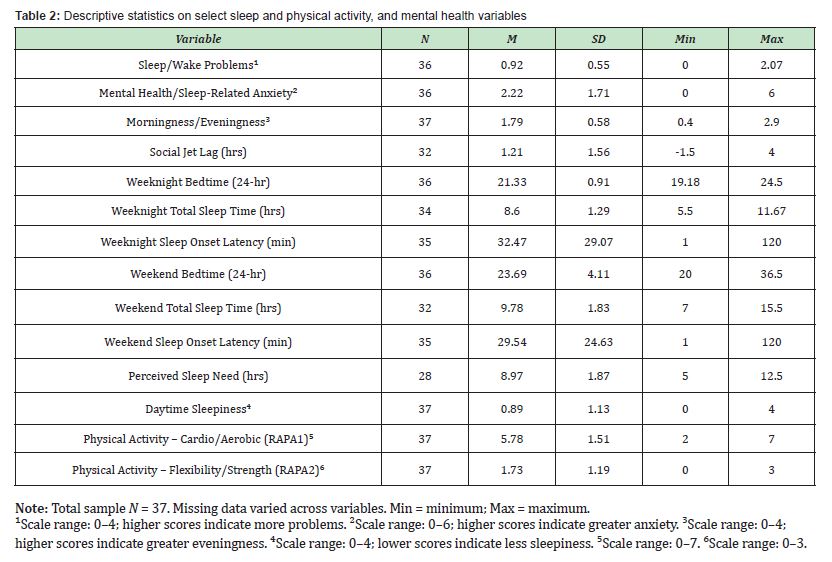
Descriptive statistics for select sleep and physical activity scores are reported in Table 2. A total of 37 participants were included in the analyses, with minor missing data across several variables. The sample had a mean age of 13.59 years (SD = 2.80, range = 9.24–19.61) and a mean BMI of 56.21 (SD = 20.71, range = 22.91–100.45). As expected, the two groups based upon meeting sleep recommendations did not differ significantly in age, t(32) = -0.12, p = .908, with those not meeting sleep recommendations averaging 13.68 years (SD = 2.67) and those meeting recommendations averaging 13.80 years (SD = 3.00). This confirms the groups were well-matched on age. Regarding sleep timing on weekdays, participants reported an average bedtime of approximately 9:20 PM in 24-hour time (M = 21.33, SD = 0.91), with a mean total sleep time of 8.60 hours (SD = 1.29). Sleep onset latency on weeknights averaged 32.47 minutes (SD = 29.07, range = 1–120 minutes), which is above the recommended threshold of 15 minutes and suggests that delayed sleep onset may be a concern for a notable portion of this sample. On weekends, bedtimes were considerably later (M = 23.69, SD = 4.11), with longer total sleep time averaging 9.78 hours (SD = 1.83) and a slightly lower sleep onset latency of 29.54 minutes (SD = 24.63). Participants reported needing an average of 8.97 hours of sleep to feel their best (SD = 1.87), which is broadly consistent with recommendations for this age group. Social jet lag, reflecting the discrepancy between weekday and weekend sleep schedules, averaged 1.21 hours (SD = 1.56), indicating that on average participants were sleeping over an hour longer on weekends, which is suggestive of accumulated weekday sleep debt.
Descriptively, children who were blind (n = 8) were younger (M = 11.77 years, SD = 1.65) compared to those in the low vision group (M = 14.09 years, SD = 2.87), and also tended to score lower on RAPA 2 (strength and flexibility; M = 1.00 vs. M = 1.93), report less daytime sleepiness (M = 0.25 vs. M = 1.07), and have slightly longer weeknight and weekend total sleep times. Sleep onset latency on both weeknights and weekends appeared shorter in blind youth as well. These descriptive patterns are interesting and may in part reflect the age difference between groups, as younger children tend to have earlier and longer sleep.
In terms of sleep quality and daytime functioning, participants reported relatively low levels of sleep/wake problems (M = 0.92, SD = 0.55, range = 0–2.07 out of 4) and mild sleepiness (M = 0.89, SD = 1.13, range = 0–4). Mental health concerns related to sleep, specifically anxiety, were moderate on average (M = 2.22, SD = 1.71, range = 0–6). Morningness/eveningness scores suggested participants fell slightly toward the evening chronotype on average (M = 1.79, SD = 0.58, out of 4).
Physical activity levels were relatively high, with participants scoring near the upper end of the cardio/aerobic scale (RAPA 1: M = 5.78, SD = 1.51, out of 7) and in the moderate range for flexibility and strength activity (RAPA 2: M = 1.73, SD = 1.19, out of 3). There was no significant difference in aerobic physical activity scores (RAPA 1) between children who did not meet sleep recommendations (M = 5.85, SD = 1.21) and those who did (M = 5.81, SD = 1.75), t(32) = 0.07, p = .948. Sleep adequacy does not appear to be related to aerobic activity levels in this sample. Children who met the recommended sleep duration for their age group had significantly higher RAPA 2 (strength and flexibility) scores (M = 2.19, SD = 1.08) compared to those who did not meet the recommendation (M = 1.23, SD = 1.09), t(32) = -2.51, p = .017. Higher aerobic physical activity scores were significantly associated with greater daytime sleepiness (r = .33, p = .047). One interpretation is that children who are more physically active may experience greater fatigue as a byproduct of their activity level. However, this finding should be interpreted cautiously, as no other sleep variables were significantly correlated with aerobic activity, and the association could also reflect that more active kids are simply more attuned to their body's fatigue signals. Replication in a larger sample would help clarify this relationship. Greater participation in flexibility and strength-based activities was significantly associated with longer weeknight total sleep time (r = .36, p = .039), suggesting that children who engage in more anaerobic physical activity tend to sleep longer on weeknights. No other sleep variables reached significance (p’s > 0.05), and as with the other correlations, the small sample size likely reduces statistical power to detect true associations that may exist. This suggests that adequate sleep is associated with greater participation in anaerobic or strength-based physical activity.
Children who did not meet the recommended sleep duration reported higher levels of mental health problems (M = 4.54, SD = 2.79) than those who did (M = 3.15, SD = 2.01); however, this difference did not reach statistical significance, t(31) = 1.67, p = 0.106. The trend is suggestive but should be interpreted with caution given the small sample sizes. Children not meeting sleep recommendations also reported more sleep-related mental health problems (M = 2.77, SD = 1.96) compared to those meeting recommendations (M = 1.90, SD = 1.52), though this difference was also not statistically significant, t(31) = 1.43, p = 0.162. Again, the pattern is in the expected direction but does not meet the conventional threshold for significance.
BMI showed a strong association with sleep-wake problems (p < 0.05; r = 0.924) and a near-significant relationship with mental health symptoms (p = 0.055; r = 0.752) likely due to a lack of power. Greater sleep-related anxiety was significantly associated with shorter weeknight total sleep time (r = -.37, p = .033), such that children sleeping less during the week reported more anxiety symptoms. No other sleep variables, including sleep onset latency, weekend sleep, sleepiness, social jet lag, or physical activity, were significantly associated with sleep-related anxiety in this sample (p’s > 0.05), though the small sample size likely limits the ability to detect smaller effects.
The present study explored preliminary associations between sleep, physical activity, and mental health in youth with VI. Overall, the findings revealed that sleep was associated with both physical activity and mental health scores. Of the 34 participants with valid data, 21 (61.8%) were meeting age-appropriate sleep duration recommendations (9–12 hours for pre-teens; 8–10 hours for teens), while 13 (38.2%) were not. This means that more than one in three children in this sample were not getting sufficient sleep for their developmental stage, which is consistent with broader trends in pediatric sleep research. Consistent with findings in sighted individuals, chronotype was associated with sleep problems and daytime sleepiness. Chronotype refers to an individual’s natural inclination toward specific patterns of activity and rest, serving as a reflection or indicator of underlying circadian rhythms or the propensity for an individual to sleep at a particular time during a 24-hour period. It is the natural inclination of your body to sleep at a certain time, or what most people understand as being an early bird versus a night owl. In addition to regulating sleep and wake times, chronotype has an influence on appetite, exercise, and core body temperature.
Getting enough sleep is linked with better emotional regulation, physical and mental health, attention, learning, and behavior. Not getting enough sleep increases the risk of chronic disease.5 Notably, over one third of participants failed to meet the recommended sleep duration for their age group, 9 to 12 hours for children and 8 to 10 hours for teens. This finding is consistent with broader trends in pediatric sleep research but may be especially concerning for this population, given the compounding challenges posed by visual impairment. The findings of this study also revealed that total sleep time was negatively associated with mental health similar to the findings from a comprehensive meta-analysis of 52 studies involving over 1.4 million participants.32 Both short (<6hours) and long (>9hours) sleep durations are associated with increased risks of mental disorders.
A key finding from the current study was that participants with the least vision (B1’s) engaged in significantly less strength and flexibility activities, as measured by the RAPA 2, compared to peers with more vision. However, no other demographic or group level differences were found in physical activity or sleep patterns. These results suggest a potential challenge among students with blindness that warrants targeted intervention.
Sleep behavior patterns across the sample also reflected developmental variation. Weekday bedtimes averaged at 9:20pm, while weekend bedtimes extended to approximately 11:40 pm, likely reflecting age-related shifts in circadian preference and reduced parental oversight on non-school nights. Sleep duration averaged 8.6 hours on weekdays and 9.8 hours on weekends, with a probable disparity between children and teens. Critically, the average sleep onset latency was approximately 30 minutes, commonly regarded as a clinical threshold for problematic sleep initiation and a potential marker of broader sleep dysfunction. When kids take more than 30 minutes to fall asleep, it can indicate underlying sleep issues. This delay in sleep onset, known as sleep latency, can be linked to factors such as anxiety, inconsistent bedtime routines, or even medical conditions like insomnia. Long sleep latency can disrupt a child's overall sleep cycle, leading to less restorative sleep, difficulty waking up in the morning, and increased daytime fatigue. Over time, this can affect their attention, behavior, and emotional regulation, potentially impacting school performance and social interactions.33
Participants who achieved sufficient sleep showed notably higher RAPA 2 scores, indicating a clear link between adequate sleep and greater engagement in strength and flexibility activities. This aligns with findings from Bittner and colleagues,34 who reported that daytime activity patterns can shape sleep disturbances in adults. Taken together, the results highlight a bidirectional relationship between sleep and physical health, reinforcing the need for behavioral and environmental supports that promote both healthy sleep and regular physical activity.
Parents and guardians play a pivotal role in shaping their child’s sleep health, and becoming informed about the importance of sleep is a critical first step. Research has shown that children whose caregivers possess greater knowledge about sleep tend to experience better sleep outcomes compared to those whose caregivers lack such awareness.35 This underscores the value of parent/guardian education in promoting healthy sleep behaviors. Moreover, establishing and maintaining good sleep hygiene can help mitigate common nighttime challenges such as difficulty falling asleep, frequent awakenings, or daytime fatigue. An optimal sleep environment should be cool, dark, and quiet, conditions that support the body’s natural circadian rhythms and promote uninterrupted rest. In addition, consistent sleep and wake times are essential, even on weekends, to reinforce the body’s internal clock. Avoiding stimulating activities before bedtime, particularly screen use, can also improve sleep onset and quality.36 By fostering these healthy sleep habits including physical activity engagement, and understanding the science behind them, caregivers of youth with VI can create a foundation for long-term physical, emotional, and cognitive well-being in their children.
This study was conducted at a single sports camp and is subject to several limitations that may impact the generalizability and interpretability of the findings. First, the relatively small sample size limits statistical power and restricts broader applicability to youth with VI in other settings. While this is a smaller sample size, it should be noted that this is the first study addressing physical activity and sleep in this population. Additionally, it is important to be aware that visual impairment is a low incidence population. As such, this data is a significant contribution to the literature. It should also be noted that the data collected were largely subjective, relying on self-report. While this method provides important insights, it is susceptible to bias including recall inaccuracies. Finally, the environment being a sports camp may influence the type of participant who may be more inclined to being physically active. Additionally, the sports camp environment, often structured, time limited, and socially dynamic, may have influenced participants’ behavior and responses in ways that differ from every day or long-term contexts.
Lastly, there is a lack of validation of the instruments used with youth with VI. Although all the instruments used in the current study were valid, some have not all been specifically validated for this population. The authors feel that the questions and the results are still valid related to the subject we are studying.
Future research should address the limitations of the current study by expanding the sample size and including participants from other settings, including schools for the blind. Objective measures of sleep should be included, such as actigraphy to provide quantitative measures of sleep patterns and quality. Subjective perceptions of sleep, though an important next step in the literature on sleep and physical activity research, can diverge from the physiological indicators particularly in populations with sensory impairments.37 Objective and validated tools can provide insights in sleep duration and efficiency, sleep architecture and disturbances, and circadian rhythm alignment. This is particularly important in sports camp settings where sleep quality may influence motor learning, emotional regulation, and recovery. Moreover, wearable technologies like actigraphy offer a low-burden, scalable solution for capturing sleep data in naturalistic environments. By integrating these tools, future research can validate self-reported outcomes with physiological data, identify patterns that may not be consciously perceived by participants, and strengthen the evidence base for interventions targeting sleep and performance.38
This study highlights the complex relationship between sleep, physical activity, mental health, and the unique challenges faced by youth with VI. The results reinforce the importance of addressing disparities in both sleep duration and engagement in physical activity, particularly among those with blindness. Parental/guardian awareness, individualized intervention, and the integration of objective sleep measures in future research will be essential to better understand and support the well-being of this population. Practitioners should consider integrating structured physical activity into daily routines for youth with VI, not only to promote fitness but also to support sleep health. Given the limited research, individualized approaches and ongoing observation are key to identifying effective strategies. Ultimately, a holistic approach that considers biological, behavioral, and environmental factors will be key to promoting physical activity and healthy sleep habits to improve development and long-term independence.
None.
This Research Article received no external funding.
Regarding the publication of this article, the authors declare that they have no conflicts of interest.
- 1. Fadzil A. Factors Affecting the Quality of Sleep in Children. Children. 2021;8(2):122.
- 2. Paruthi S, Brooks LJ, D'Ambrosio C, et al. Consensus Statement of the American Academy of Sleep Medicine on the Recommended Amount of Sleep for Healthy Children: Methodology and Discussion. Journal of clinical sleep medicine: JCSM: official publication of the American Academy of Sleep Medicine. 2016;12(11):1549-1561.
- 3. Chaput JP, Dutil C, Sampasa Kanyinga H. Sleeping hours: what is the ideal number and how does age impact this?. Nature and science of sleep. 2018;10:421-430.
- 4. Fletcher FE, Conduit R, Foster Owens MD, et al. The Association Between Anxiety Symptoms and Sleep in School–Aged Children: A Combined Insight From the Children's Sleep Habits Questionnaire and Actigraphy. Behavioral sleep medicine. 2018;16(2):169-184.
- 5. Centers for Disease Control and Prevention (CDC). Sleep and health. 2024.
- 6. Matricciani L, Olds T, Petkov J. In search of lost sleep: secular trends in the sleep time of school–aged children and adolescents. Sleep Medicine Reviews. 2012;6(3):203-211.
- 7. Owens J, Adolescent Sleep Working Group, Committee on Adolescence. Insufficient sleep in adolescents and young adults: an update on causes and consequences. Pediatrics. 2014;134(3):e921-e932.
- 8. Reddy S, Reddy V, Sharma S. Physiology, Circadian Rhythm. In: StatPearls [Internet]. Treasure Island (FL): StatPearls Publishing. 2024.
- 9. Cheng DCY, Ganner JL, Gordon CJ, et al. The efficacy of combined bright light and melatonin therapies on sleep and circadian outcomes: A systematic review. Sleep Medicine Reviews. 2021;58:101491.
- 10. Rogers EM, Banks NF, Jenkins ND. The effects of sleep disruption on metabolism, hunger, and satiety, and the influence of psychosocial stress and exercise: A narrative review. Diabetes/metabolism research and reviews. 2024;40(2):e3667.
- 11. Wright KP, Jr Hull JT, Czeisler CA. Relationship between alertness, performance, and body temperature in humans. American journal of physiology. Regulatory, integrative and comparative physiology. 2002;283(6):R1370-R1377.
- 12. Štefan L, Krističević T, Sporiš G. The associations of self–reported physical fitness and physical activity with sleep quality in young adults: A population based study. Mental Health and Physical Activity. 2018;14:131-135.
- 13. Fonseca APLM, de Azevedo CVM, Santos RMR. Sleep and health related physical fitness in children and adolescents: a systematic review. Sleep science (Sao Paulo, Brazil). 2021;14(4):357-365.
- 14. Brand S, Kalak N, Gerber M, et al. During early to mid adolescence, moderate to vigorous physical activity is associated with restoring sleep, psychological functioning, mental toughness and male gender. Journal of sports sciences. 2017;35(5):426-434.
- 15. Hayton J, Marshall J, Dimitriou D. Lights Out: Examining Sleep in Children with Vision Impairment. Brain sciences. 2021;1(4):421.
- 16. Flynn L, Peltz J, Lieberman L, et al. The relationship between sleep and physical activity for children with visual impairments: A scoping review. Journal of Visual Impairments & Blindness. 2025;119(3):196-209.
- 17. Arbour Nicitopoulos KP, Bassett Gunter RL, Leo J, et al. A cross-sectional examination of the 24–hour movement behaviours in Canadian youth with physical and sensory disabilities. Disability and Health Journal. 2021;14(1):100980.
- 18. Haegele JA, Aigner CJ, Healy S. Prevalence of meeting physical activity, screen-time, and sleep guidelines among children and adolescents with and with visual impairments in the United States. Adapted Physical Activity Quarterly. 2019;36(3):399-405.
- 19. Hou M, Herold F, Healy S, et al. 24-Hour movement behaviors among visually impaired US children and adolescents. Mental Health and Physical Activity. 2023;25:1-8.
- 20. Dursun OB, Erhan SE, Ibiş EÖ, et al. The effect of ice skating on psychological well–being and sleep quality of children with visual or hearing impairment. Disability and Rehabilitation. 2015;7(9):783-789.
- 21. Kredlow MA, Capozzoli MC, Hearon BA, et al. The effects of physical activity on sleep: a meta-analytic review. Journal of behavioral medicine. 2015;38:427-449.
- 22. Wang F, Boros S. The effect of physical activity on sleep quality: a systematic review. European journal of physiotherapy. 2021;23(1):11-18.
- 23. Antczak D, Lonsdale C, Lee J, et al. Physical activity and sleep are inconsistently related in healthy children: A systematic review and meta–analysis. In Sleep Medicine Reviews (Vol. 51). W.B. Saunders Ltd. 2021.
- 24. Lang C, Kalak N, Brand S, et al. The relationship between physical activity and sleep from mid adolescence to early adulthood. A systematic review of methodological approaches and meta-analysis, Sleep Medicine Reviews. 2015.
- 25. Wolfson R, Carskadon MA. Sleep schedules and daytime functioning in adolescents. Child Development. 1998;69:875-887.
- 26. Somma A, Marelli S, Castronovo V, et al. Assessing Sleep Habits in Italian Community-Dwelling Adolescents: Psychometric Properties of the School Sleep Habits Survey Scales. Mediterranean Journal of Clinical Psychology. 2022;10(3).
- 27. Topolski TD, LoGerfo J, Patrick DL, et al. The rapid assessment of physical activity (RAPA) among older adults. Preventing chronic disease. 2026;3(4):A118.
- 28. Nesbitt D, Molina S, Sacko R, et al. Examining the feasibility of supine-to-stand as a measure of functional motor competence. Journal of Motor Learning and Development. 2018;6(2):267-286.
- 29. Beach P, Brian A, Sniatecki J. Content and face validity of quality–of–life instruments for youth with visual impairments: A Delphi study. British Journal of Visual Impairments. 2024;43(2):465-474.
- 30. Raj J, Pitchai S. The development of a new quality of life questionnaire for children with hearing loss-the impact of hearing loss on children (IHL–C): Field testing and psychometric evaluation. Disability, CBR & Inclusive Development. 2015;26(1):25-49.
- 31. Chauhan S, Norbury R, Faßbender KC, et al. Beyond sleep: A multidimensional model of chronotype. Neuroscience & Biobehavioral Reviews. 2023;148:105114.
- 32. Zhang J, He M, Wang X, et al. Association of sleep duration and risk of mental disorder: a systematic review and meta-analysis. Sleep Breath. 2024;28:261-280.
- 33. Wang W, Zhu Y, Yu H, et al. The impact of sleep quality on emotion regulation difficulties in adolescents: a chained mediation model involving daytime dysfunction, social exclusion, and self-control. BMC Public Health. 2024;24:1862.
- 34. Bittner AK, Haythornthwaite JA, Patel C, et al. Subjective and Objective Measures of Daytime Activity and Sleep Disturbance in Retinitis Pigmentosa. Optometry and vision science: official publication of the American Academy of Optometry. 2018;95(9):837-843.
- 35. McDowall PS, Galland BC, Campbell AJ, et al. Parent knowledge of children's sleep: A systematic review. Sleep medicine review. 2017;31:39–47.
- 36. Chung S, Wilson KE, Miller AL, et al. Home sleeping conditions and sleep quality in Low–Income Preschool children. Sleep Medicine Research. 2014;5(1):29-32.
- 37. Cudney LE, Frey FN, McCabe RE, et al. Investigating the relationship between objective measures of sleep and self–report sleep quality in healthy adults: a review. Journal of Clinical Sleep Medicine. 2022;18(3):927-936.
- 38. Haegele JA, Zhu X, Healy S, et al. Proportions of youth with visual impairments meeting 24-hr movement guidelines. Child: Care, Health, and Development. 2020;46(3):345-351.
